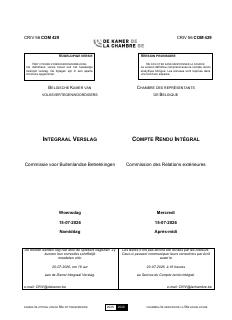
Belgian Minister for Foreign Affairs answer to a parliamentary question on China's ethnic unity law
- Country
- EU Member States: 🇧🇪 Belgium
- National Institution
- Belgium: Belgian Ministry of Foreign Affairs
- Date
- Jul 15, 2026
- Topic
- Assimilation
- Human Rights
- Transnational Repression
- Summary
In an answer to joint parliamentary questions tabled by three Members of the Chamber of Representatives (questions 6017447C, 56017634C and 6017940C), Belgian Minister for Foreign Affairs Maxime Prévot stated that Belgium is closely following the human rights situation in China, with particular attention to ethnic and religious minorities, and that the law on so-called ethnic unity is part of this assessment.
He highlighted concerns over the law’s extraterritorial dimension and the possibility that broadly formulated provisions could be used to restrict freedom of expression, academic freedom, and other fundamental rights abroad.
The Minister highlights the European Parliament resolution of 30 April 2026 on the law and notes that it has raised concerns with Chinese authorities regarding minority rights, freedom of religion or belief, and cultural rights, and that it continues to address these issues through diplomatic channels, EU frameworks, and multilateral forums.
The Minister also underlines that Belgium takes reports of transnational repression seriously and that the protection of persons on Belgian territory falls under the responsibility of the relevant security and justice authorities.
- Preview

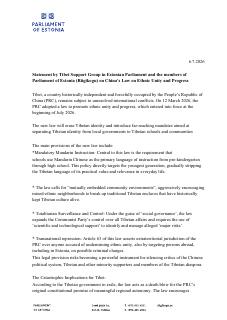
Statement by Members of Parliament of Estonia on China's Law on Ethnic Unity and Progress
- Country
- EU Member States: 🇪🇪 Estonia
- National Institution
- Estonia: Estonia Tibet Parliamentary Group
- Date
- Jul 6, 2026
- Topic
- Human Rights
- Summary
The statement, signed by 51 members of the Estonian Riigikogu, condemns China’s new Law on Ethnic Unity and Progress, which entered into force in July 2026.
It warns that the law threatens Tibetan identity by imposing Mandarin-language education, promoting the dissolution of traditional Tibetan communities, and expanding state surveillance and control. The signatories argue that the legislation undermines Tibetan cultural, linguistic and religious rights and enables the criminalisation of Tibetan identity. They highlight concerns over the law’s extraterritorial reach, including potential targeting of Tibetan supporters and critics abroad. The statement calls on the PRC to repeal the law, urges UN bodies to address assimilation policies, and demands stronger international diplomatic pressure. It also expresses support for the preservation of Tibetan culture and identity and for a peaceful resolution of the China–Tibet conflict through dialogue.
- Source
- Riigikogu
- Preview

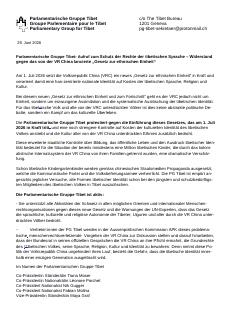
Statement by the Swiss Parliamentary Group for Tibet: Call to protect the rights of the Tibetan language – opposition to the ‘Ethnic Unity Law’ introduced by the People’s Republic of China
- Country
- Non EU Member States: 🇨🇭 Switzerland
- National Institution
- Switzerland: Swiss Parliamentary Group for Tibet
- Date
- Jun 29, 2026
- Topic
- Human Rights
- Summary
In this statement, the Swiss Parliamentary Group for Tibet denounces the PRC’s new ‘Law on Ethnic Unity and Progress’, entering into force on 1 July 2026, as a tool of forced assimilation threatening Tibetan language, culture and religious identity.
The group warns that increased state control over education and public life, including the boarding school system separating Tibetan children from their families, risks the erosion of Tibetan identity within a generation. It supports Switzerland’s efforts in international forums to oppose the law and urges the Federal Council to raise concerns with China and defend the fundamental rights of the Tibetan people.
- Source
- CTA
- Preview

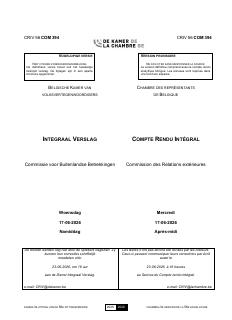
Belgian Minister for Foreign Affairs answer to a parliamentary question on the succession of the Dalai Lama (2026)
- Country
- EU Member States: 🇧🇪 Belgium
- National Institution
- Belgium: Belgian Ministry of Foreign Affairs
- Date
- Jun 17, 2026
- Topic
- Dalai Lama
- Summary
In an answer to a parliamentary question (Question 56017027C), Belgian Minister for Foreign Affairs Maxime Prévot stated that the succession of the Dalai Lama is a matter for the Tibetan community itself and should take place without interference from secular authorities.
The Minister said Belgium systematically raises the situation in Tibet with Chinese authorities, including during his visit to China in April 2026 and political consultations in March 2026. He added that Belgium addressed the protection of Tibetan cultural identity and the need for China to respond to outstanding requests from UN Special Rapporteurs during China’s 2024 Universal Periodic Review. Belgium also continues to raise Tibetan human rights issues within the EU-China human rights dialogue and in multilateral forums, and will continue to closely monitor developments, he said.
- Preview

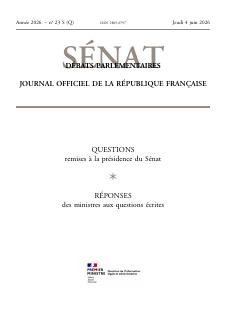
French Minister for Foreign Affairs answer to a parliamentary question on Zhang Yadi
- Country
- EU Member States: 🇫🇷 France
- National Institution
- France: French Ministry of Foreign Affairs
- Date
- Jun 4, 2026
- Topic
- Individual Cases
- Summary
In an answer to a parliamentary question tabled in the Senate (Question 07643), the French Ministry for Europe and Foreign Affairs stated that the case of Zhang Yadi, a young Chinese student who was studying in France and was arrested in China in July 2025 for her peaceful advocacy for Tibet, is being closely monitored by France and at the European level. He said France continues to raise her case with Chinese authorities and remains mobilised to seek her release.
The Minister added that France closely follows the broader human rights situation in China and Tibet, supporting civil society and raising concerns in international forums, including at the UN and within the EU. It highlighted France’s recommendations during China’s Universal Periodic Review to protect freedom of religion, its support for joint statements on human rights in Xinjiang and Tibet, and EU efforts to defend Tibetan identity, culture and fundamental freedoms.
- Source
- French Senate
- Preview

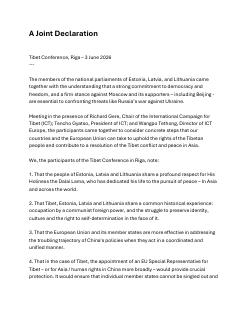
Joint Riga Declaration of 3 June 2026 on China's new ethnic unity law and support for more EU coordination on Tibet
- Country
- EU Member States: 🇪🇪 Estonia
- EU Member States: 🇱🇹 Lithuania
- EU Member States: 🇱🇻 Latvia
- National Institution
- Estonia: Estonian MPs
- Latvia: Latvian MPs
- Lithuania: Lithuanian MPs
- Date
- Jun 3, 2026
- Topic
- Assimilation
- Summary
In this joint declaration adopted at the Tibet Conference at the Latvian Parliament in Riga, parliamentarians from Estonia, Latvia, and Lithuania express solidarity with the Tibetan people and support stronger EU action to protect Tibetan rights.
They highlight the shared historical experiences of the Baltic states and Tibet in preserving identity, culture, and self-determination under communist rule, and call for greater EU coordination in addressing China’s policies.
The declaration calls for the appointment of an EU Special Representative for Tibet (or for Asia/human rights in China) to strengthen EU engagement and provide protection against pressure from Beijing.
It condemns China’s Law on Promoting Ethnic Unity and Progress, adopted in 2026, as a tool of forced assimilation threatening Tibetan cultural, religious, and linguistic identity, and calls on national parliaments to adopt resolutions opposing the law. The participants also commit to increasing parliamentary support for Tibet, strengthening coordination on human rights in China, and encouraging EU Member States to support the initiative for an EU Special Representative for Tibet.
- Source
- ICT
- Preview

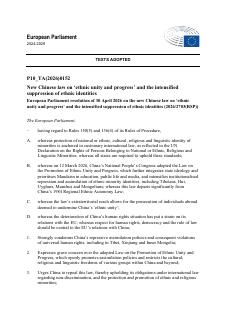
European Parliament resolution of 30 April 2026 on the new Chinese law on ‘ethnic unity and progress’ and the intensified suppression of ethnic identities
- EU Institution
- European Parliament
- Document Type
- Resolution
- Date
- Apr 30, 2026
- Topic
- Dalai Lama
- Human Rights
- Individual Cases
- Panchen Lama
- Summary
The resolution amongst other points:
-urges China to repeal the law, which it says openly promotes assimilation policies; -denounces the law’s extraterritorial reach and calls on the EU and its Member States to protect those at risk of transnational repression in the EU; -calls for EU sanctions on those responsible for drafting and implementing the law.
The text also reiterates the European Parliament’s rejection of Chinese interference in the succession of the Dalai Lama, and calls for the release of Choktrul Dorje Ten Rinpoche, Palden Yeshi, and the 11th Panchen Lama.
- Source
- European Parliament
- Preview

Czech Senate resolution on the selection of the new 15th Dalai Lama and the situation of minorities following the adoption of the Law on Promoting Ethnic Unity and Progress in the People’s Republic of China
- Country
- EU Member States: 🇨🇿 Czechia
- National Institution
- Czechia: Czech Senate
- Date
- Mar 25, 2026
- Topic
- Assimilation
- Dalai Lama
- Religious Freedom
- Summary
The resolution clearly states that the People’s Republic of China has no legitimate authority to select the successor to the 14th Dalai Lama, and calls on the Czech government to support the Tibetan people’s free choice of the 15th Dalai Lama.
It also expresses grave concern over China’s Law on Promoting Ethnic Unity and Progress that was adopted that same month and which the Senate described as an instrument “openly advocating assimilation” that restricts cultural, religious and linguistic freedoms, including for Tibetans.
- Source
- ICT
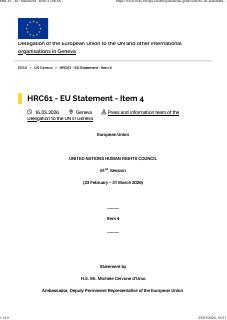
EU Statement on Tibet under Item 4 - UN Human Rights Council 61st Session
- EU Institution
- European External Action Service
- Document Type
- Statement/Declaration/Speech
- Date
- Mar 16, 2026
- Topic
- Boarding schools
- Education
- Human Rights
- Individual Cases
- Religious Freedom
- Summary
In its statement under item 4 at the 61st Session of the UN Human Rights Council, the EU stated:
"The human rights situation in Tibet continues to be dire. Indicators of this include large-scale coercive enrolment in obligatory boarding schools and the suppression of protests. We are concerned about reports that Tibetan schools teaching Tibetan language and culture have been shut down and that Chinese authorities have insisted that all students attend state schools where Tibetan is only taught as a stand-alone subject. We encourage China to cooperate with international human rights mechanisms, including all relevant Special Procedures mandates and treaty bodies, in particular the Committee on the Elimination of Racial Discrimination and the Committee against Torture."
The statement also calls for the immediate release of a number of Tibetan political prisoners, including Chadrel Rinpoche, Go Sherab Gyatso,Tashi Dorje, as well as young Chinese Tibet activist Zhang Yadi.
- Source
- EEAS
- Preview

French Minister for Foreign Affairs answer to a parliamentary question on threats against the Tibetan language
- Country
- EU Member States: 🇫🇷 France
- National Institution
- France: French Ministry of Foreign Affairs
- Date
- Feb 27, 2026
- Topic
- Boarding schools
- Education
- Forced Labour
- Human Rights
- Sino-Tibetan dialogue
- Summary
In an answer to two parliamentary questions tabled in the National Assembly (“Threats against the Tibetan language” – Questions 10263 and 10264), the French Ministry for Europe and Foreign Affairs reiterated that France is “deeply concerned” about reports of a system of preschool boarding schools for Tibetan children that “would threaten the transmission of Tibetan culture, language and religion” and potentially violate children’s fundamental rights.
It said it regularly raises the situation in Tibet in multilateral fora, including at the United Nations Human Rights Council, supported EU statements recalling reports of school closures and forced assimilation.
It also said it backed the EU ban on products made with forced labour, and calls for the resumption of dialogue between the envoys of the Dalai Lama and the Chinese authorities.
- Source
- French National Assembly
- Preview

Estonian Riigikogu's statement on the protection of Tibetan children
- Country
- EU Member States: 🇪🇪 Estonia
- National Institution
- Estonia: Estonian Riigikogu
- Date
- Feb 11, 2026
- Topic
- Education
- Summary
The statement condemns China’s boarding school system for Tibetan children, and call for its immediate abolition.
It also calls on Chinese authorities to allow the establishment of private Tibetan schools; and on countries and the European commission to request access for diplomats, independent journalists, and international observers to Tibet.
- Source
- Riigikogu
EU Statement at the 80th Session of the UN General Assembly 3rd Committee's General Debate on 3 October 2025
- EU Institution
- European External Action Service
- Document Type
- Statement/Declaration/Speech
- Date
- Oct 3, 2025
- Topic
- Human Rights
- Summary
In a statement delivered at the UN General Assembly 3rd Committee,the Head of the European Union Delegation to the United Nations Stavros Lambrinidis said:
"The EU reiterates its serious concerns about the human rights situation in China, especially in Xinjiang, Tibet, Inner Mongolia and Hong Kong."
- Preview

EU Statement on Tibet under Item 4 - UN Human Rights Council 60th Session
- EU Institution
- European External Action Service
- Document Type
- Statement/Declaration/Speech
- Date
- Sep 23, 2025
- Topic
- Boarding schools
- Education
- Individual Cases
- Summary
In its statement under item 4 at the 60th Session of the UN Human Rights Council, the EU stated "The human rights situation in Tibet continues to be dire. Indicators of this include obligatory boarding schooling. We are deeply concerned over reports that Tibetan schools teaching Tibetan language and culture have been shut down and that Chinese authorities have insisted that all students attend state schools where Tibetan is only taught as a stand-alone subject."
The statement also calls for the immediate release of a number of Tibetan political prisoners, including Anya Sengdra, Chadrel Rinpoche, Go Sherab Gyatso, Golog Palden and Tashi Dorje.
- Source
- EEAS
- Preview

Answer to a parliamentary question on Tibet: Politics and Government
- Country
- Non EU Member States: 🇬🇧 United Kingdom
- National Institution
- United Kingdom: UK Foreign Office
- Date
- Sep 3, 2025
- Topic
- Dalai Lama
- Human Rights
- Summary
In this answer to a parliamentary question (Question UIN 69268), the UK Government states that it continues to raise concerns with the Chinese authorities over the human rights situation in Tibet, including the erosion of Tibetan cultural rights and traditions. The Government notes that these concerns have been raised at the highest political levels and through multilateral engagement, including a UK-convened event at the UN Human Rights Council reaffirming freedom of religion or belief, including for Tibetan Buddhists.
It also reiterates that the UK recognises Tibet as part of the People's Republic of China and maintains that the selection of the next Dalai Lama should be decided solely by the Tibetan Buddhist community in accordance with freedom of religion or belief.
- Source
- UK Parliament
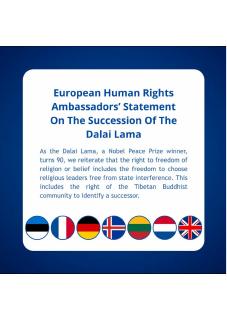
Joint European Human Rights Ambassadors' statement on the 90th birthday of the Dalai Lama and his succession
- Country
- EU Member States: 🇩🇪 Germany
- EU Member States: 🇪🇪 Estonia
- EU Member States: 🇫🇷 France
- EU Member States: 🇱🇹 Lithuania
- EU Member States: 🇳🇱 Netherlands
- Non EU Member States: 🇬🇧 United Kingdom
- Non EU Member States: 🇮🇸 Iceland
- National Institution
- Netherlands: Dutch Human Rights Ambassador
- Estonia: Estonian Human Rights Ambassador
- France: French Human Rights Ambassador
- Germany: German Human Rights Ambassador
- Iceland: Icelandic Ambassador for Human Rights
- Lithuania: Lithuanian Ambassador for Human Rights
- United Kingdom: UK Human Rights Ambassador
- Date
- Jul 6, 2025
- Topic
- Dalai Lama
- Religious Freedom
- Summary
In a social media post on their accounts on X on the occasion of the 90th birthday of the Dalai Lama, the Human Rights Ambassadors of 7 European countries - Estonia, France, Germany, Lithuania, Iceland,the Netherlands and the UK - addressed concerns surrounding the reincarnation of the Tibetan spiritual leader and rejected any external interference in the process.
- Source
- CTA
- Preview

Opinion Piece by 34 Members of the European Parliament opposing China's interferences in the succession of the Dalai Lama
- EU Institution
- Members of the European Parliament
- Document Type
- Others
- Date
- Jul 2, 2025
- Topic
- Dalai Lama
- Summary
In this opinion piece signed by 34 Members of the European Parliament, the authors call on the European Union to take a stronger stance in support of Tibetan religious freedom and against Chinese government interference in the succession of the Dalai Lama.
They highlight the Dalai Lama’s commitment to non-violence, dialogue, and the Middle Way Approach seeking genuine autonomy for Tibet within China, and argue that Beijing’s policies of assimilation, including the boarding school system and attempts to control the reincarnation process, threaten Tibetan identity and culture.
The MEPs call on the EU and its Member States to issue a joint statement affirming that the selection of Tibetan Buddhist leaders must take place without state interference and according to religious traditions, and to consider sanctions under the EU Global Human Rights Sanctions Regime against Chinese officials involved in such interference. They also urge China to resume meaningful dialogue with representatives of the Dalai Lama, based on the 2008 Memorandum on Genuine Autonomy, arguing that dialogue remains the only sustainable path towards peace and stability in Tibet.
List of signatories: Vytenis ANDRIUKAITIS (Lithuania, S&D) Petras AUŠTREVIČIUS (Lithuania, Renew Europe) Saskia BRICMONT (Belgium, Greens/EFA) Per CLAUSEN (Denmark, GUE/NGL) João COTRIM DE FIGUEIREDO (Portugal, Renew Europe) Sebastian EVERDING (Germany, GUE/NGL) Michael GAHLER (Germany, EPP) Hanna GEDIN (Sweden, GUE/NGL) Markéta GREGOROVÁ (Czechia, Greens/EFA) Hannes HEIDE (Austria, S&D) Rasa JUKNEVIČIENĖ (Lithuania, EPP) Ondřej KOLÁŘ (Czechia, EPP) Andrey KOVATCHEV (Bulgaria, EPP) Miriam LEXMANN (Slovakia, EPP) Reinhold LOPATKA (Austria, EPP) Erik MARQUARDT (Germany, Greens/EFA) Sara MATTHIEU (Belgium, Greens/EFA) Liudas MAŽYLIS (Lithuania, EPP) Verena MERTENS (Germany, EPP) Luděk NIEDERMAYER (Czechia, EPP) Rasmus NORDQVIST (Denmark, Greens/EFA) Danuše NERUDOVÁ (Czechia, EPP) Maria OHISALO (Finland, Greens/EFA) Leoluca ORLANDO (Italy, Greens/EFA) Urmas PAET (Estonia, Renew) Kira Marie PETER-HANSEN (Denmark, Greens/EFA) Chloé RIDEL (France, S&D) Majdouline SBAÏ (France, Greens/EFA) Jonas SJÖSTEDT (Sweden, GUE/NGL) Villy SØVNDAL (Denmark, Greens/EFA) Bruno TOBBACK (Belgium, S&D) Dainius ŽALIMAS (Lithuania, Renew Europe) and chair of the EU Parliament Tibet Friendship Group Tomáš ZDECHOVSKÝ (Czech Republic, EPP) Milan ZVER (Slovenia, EPP)
- Source
- EUObserver
EU Press Release following 40th EU-China Human Rights Dialogue
- EU Institution
- European External Action Service
- Document Type
- Press Release
- Date
- Jun 14, 2025
- Topic
- Dalai Lama
- Religious Freedom
- Summary
XXX
- Preview

Answer to a parliamentary question on the 30th anniversary of the enforced disappearance of the 11th Panchen Lama of Tibet
- EU Institution
- EU Commission & EU High Representative for Foreign Affairs and Security Policy (HR/VP)
- Document Type
- Answer to Parliamentary Questions
- Date
- May 27, 2025
- Topic
- Panchen Lama
- Religious Freedom
- Summary
In this answer to a parliamentary question tabled by 7 Members of the European Parliament (Question E-001550/2025), the EU HR/VP on behalf of the European Commission states that the EU raised the case of the Panchen Lama during a visit of a delegation the European External Action Service to the Tibet Autonomous Region in June 2024. The official reply received was that he ‘currently conducts a normal life and does not wish to be contacted’.
- Source
- European Parliament
- Preview

European Parliament resolution of 8 May 2025 on violations of religious freedom in Tibet
- EU Institution
- European Parliament
- Document Type
- Resolution
- Date
- May 8, 2025
- Topic
- Dalai Lama
- Human Rights
- Panchen Lama
- Religious Freedom
- Summary
The resolution amongst other points:
-Firmly opposes any attempt by the Chinese Government to interfere in the selection of Tibetan Buddhist spiritual leaders, including the Dalai Lama;
-Expresses its deep concern and sorrow over the suspicious death of Tulku Hungkar Dorje
-Demands that the EU impose sanctions on officials and entities responsible for human rights violations in Tibet
-Calls for the release of all religious and political prisoners, including the Panchen Lama
- Source
- European Parliament
- Preview

Dutch Tweede Kamer resolution of 15 April 2025 on the succession of the Dalai Lama
- Country
- EU Member States: 🇳🇱 Netherlands
- National Institution
- Netherlands: Dutch Tweede Kamer
- Date
- Apr 15, 2025
- Topic
- Dalai Lama
- Human Rights
- Religious Freedom
- Summary
Motion 35207-China/Nr.93 states that the Chinese Communist Party must have no say in the succession of the Dalai Lama, and calls on the government to convey this message in bilateral and multilateral forums.
- Source
- ICT
Dutch Tweede Kamer resolution of 15 April 2021 on human rights violations in China
- Country
- EU Member States: 🇳🇱 Netherlands
- National Institution
- Netherlands: Dutch Tweede Kamer
- Date
- Apr 15, 2025
- Topic
- Human Rights
- Summary
Motion 35207-China/Nr. 92 notes that China is "frequently guilty of human rights violations", in particular against ethnic minorities and calls on the Dutch government to raise these human rights violations "repeatedly at all international and bilateral meetings" with China, and to "clearly express its disapproval of such actions"
- Source
- ICT
Dutch Tweede Kamer resolution of 15 April 2021 on the appointment of a special EU representative and a joint EU Tibet strategy
- Country
- EU Member States: 🇳🇱 Netherlands
- National Institution
- Netherlands: Dutch Tweede Kamer
- Date
- Apr 15, 2025
- Topic
- Human Rights
- Summary
Motion 35207-China/Nr.84 requests that the Dutch government work towards the appointment of a special EU representative and a joint EU Tibet strategy, modeled after the American Resolve Tibet Act.
- Source
- ICT
Swiss Federal Coucil report of 12 February 2025 on the situation of Tibetans and Uyghurs in Switzerland
- Country
- Non EU Member States: 🇨🇭 Switzerland
- National Institution
- Switzerland: Swiss Federal Council
- Date
- Feb 12, 2025
- Topic
- Transnational Repression
- Summary
XXX XXX
- Source
- Swiss Federal Council
- Preview

Belgian Government Coalition Agreement 2025-2029
- Country
- EU Member States: 🇧🇪 Belgium
- National Institution
- Belgium: Belgian Government
- Date
- Jan 31, 2025
- Topic
- Human Rights
- Summary
In its Federal Coalition Agreement (the work program and statement of intent of the Belgian federal government) for 2025-2029, the Belgian government states:
"We continue to denounce human rights violations, particularly regarding the identity of Uyghurs and Tibetans."
- Source
- Belgian Government
- Preview

European Parliament resolution of 10 October 2024 on the cases of unjustly imprisoned Uyghurs in China, notably Ilham Tohti and Gulshan Abbas
- EU Institution
- European Parliament
- Document Type
- Resolution
- Date
- Oct 10, 2024
- Topic
- Human Rights
- Summary
The resolution "strongly condemns" the PRC’s violations of the human rights of Uyghurs and of "people in Tibet, Hong Kong, Macau and mainland China"
- Source
- European Parliament
- Preview

EU Press Release following 39th EU-China Human Rights Dialogue (including field visit to TAR)
- EU Institution
- European External Action Service
- Document Type
- Press Release
- Date
- Jun 17, 2024
- Topic
- Boarding schools
- Dalai Lama
- Human Rights
- Individual Cases
- Religious Freedom
- Summary
The press release states that the EU "reiterated its further concerns about the very serious human rights situation in China, in particular in Xinjiang, in the Tibetan areas and Hong Kong." at the dialogue. It also indicates that the EU "stressed that the selection of religious leaders should happen without any government interference and in respect of religious norms, including in the case of the succession of the Dalai Lama."
The press release also states that the EU called on China to immediately release Tibetan activists, writers and religious leaders, including Go Sherab Gyatso and Tashi Dorje.
- Preview

European Parliament resolution of 14 December 2023 on the abduction of Tibetan children and forced assimilation practices through Chinese boarding schools in Tibet
- EU Institution
- European Parliament
- Document Type
- Resolution
- Date
- Dec 14, 2023
- Topic
- Boarding schools
- Education
- Summary
The resolution calls on Chinese authorities to immediately abolish the boarding schools system in Tibet and to allow the establishment of private Tibetan schools.
It further calls on EU Member States and the Council to impose restrictions on visas to Chinese officials tied to the boarding school system in Tibet, and urges the VP/HR and EU institutions to monitor human rights, demand access for diplomats and observers, and raise Tibet in all dialogues with China.
- Source
- European Parliament
- Preview

European Parliament recommendation of 13 December 2023 to the Council and the Vice-President of the Commission / High Representative of the Union for Foreign Affairs and Security Policy concerning EU-China relations
- EU Institution
- European Parliament
- Document Type
- Resolution
- Date
- Dec 13, 2023
- Topic
- Access to Tibet
- Boarding schools
- Education
- Forced Labour
- Human Rights
- Summary
XXXX
- Source
- European Parliament
- Preview

Answer to a parliamentary question on the 34th birthday of the Panchen Lama
- EU Institution
- EU Commission & EU High Representative for Foreign Affairs and Security Policy (HR/VP)
- Document Type
- Answer to Parliamentary Questions
- Date
- Jun 19, 2023
- Topic
- Panchen Lama
- Summary
In this answer to a parliamentary question tabled by 11 Members of the European Parliament (Question E-001329/2023), the EU HR/VP on behalf of the European Commission states that the EU has consistently raised concerns over the human rights situation in Tibet, particularly restrictions on freedom of religion or belief.
The HR/VP reiterates that the selection of religious leaders should take place without government interference and in accordance with religious traditions. He notes that the EU has repeatedly raised the issue of the succession process of the Dalai Lama with Chinese authorities, including in the EU–China Human Rights Dialogue and at high-level political meetings, and confirms that it will continue to reiterate its position as needed.
- Source
- European Parliament
- Preview

Czech Senate Committee on Education, Science, Culture, Human Rights and Petitions resolution of 30 May 2023 on boarding school and the succession of the Dalai Lama
- Country
- EU Member States: 🇨🇿 Czechia
- National Institution
- Czechia: Czech Senate Committee on Education, Science, Culture, Human Rights and Petitions
- Date
- May 30, 2023
- Topic
- Boarding schools
- Dalai Lama
- Human Rights
- Religious Freedom
- Summary
In this resolution, the Czech Senate's committee expresses deep concern over UN findings regarding "the systematic separation of Tibetan children from their families and their forced assimilation in Chinese residential schools", and urges the Chinese government to end this practice.
The resolution also opposes China’s interference in the reincarnation process of Tibetan religious leaders, including the Dalai Lama, calling it a "serious obstacle" to the freedom of religion and belief of the Tibetan people.
Finally, the Committee recommends that the Czech government raise these human rights concerns in its bilateral and international relations with China.
- Preview

French Minister for Foreign Affairs answer to a parliamentary question on the boarding school system in Tibet
- Country
- EU Member States: 🇫🇷 France
- National Institution
- France: French Ministry of Foreign Affairs
- Date
- May 11, 2023
- Topic
- Boarding schools
- Education
- Forced Labour
- Human Rights
- Sino-Tibetan dialogue
- Summary
In an answer to a parliamentary question tabled in the Senate (Question 5886), the French Ministry for Europe and Foreign Affairs stated that:
France is “deeply concerned” about reports of a system of preschool boarding schools for Tibetan children that would threaten the transmission of Tibetan culture, language and religion and violate children’s fundamental rights, including “the right to live with their family” under the Convention on the Rights of the Child.
It described the human rights situation in the Tibet Autonomous Region as “very worrying”, deplored tightened access restrictions, and said it systematically raises these issues with China bilaterally and in multilateral fora such as the United Nations Human Rights Council and at EU level, while supporting action on corporate due diligence and forced labour.
France also called for the resumption of dialogue between the envoys of the Dalai Lama and the Chinese authorities.
- Source
- French Senate
- Preview

German government statement calling to an end to the boarding school system and forced resettlement in Tibet
- Country
- EU Member States: 🇩🇪 Germany
- National Institution
- Germany: German Ministry of Foreign Affairs
- Date
- Apr 19, 2023
- Topic
- Boarding schools
- Education
- Summary
During a session of the German Bundestag's Human Rights Committee, the German Federal Government called for closing of coercive boarding schools for Tibetan children and an end to forced resettlement in Tibet.
- Source
- German Bundestag
- Preview

EU Press Release following 38th EU-China Human Rights Dialogue
- EU Institution
- European External Action Service
- Document Type
- Press Release
- Date
- Feb 17, 2023
- Topic
- Human Rights
- Individual Cases
- Summary
The press release states that the EU at the dialogue "highlighted the particularly vulnerable situation of Uyghurs, Tibetans and persons belonging to religious, ethnic and linguistic minorities across the country."
The press release also indicates that the EU raised several individual cases and "called upon China to immediately release... Tibetan activists, writers and religious leaders, including Go Sherab Gyatso, Rinchen Tsultrim and Tashi Dorje."
- Preview

European Parliament resolution of 16 September 2021 on a new EU-China strategy
- EU Institution
- European Parliament
- Document Type
- Resolution
- Date
- Sep 16, 2021
- Topic
- Human Rights
- Summary
XXX
- Source
- European Parliament
- Preview

European Parliament resolution of 8 July 2021 on Hong Kong, notably the case of Apple Daily
- EU Institution
- European Parliament
- Document Type
- Resolution
- Date
- Jul 8, 2021
- Topic
- Human Rights
- Summary
The resolution recalls "the importance of the EU continuing to raise the issue of human rights violations in China, in particular the case of minorities in Xinjiang and Tibet, at every political and human rights dialogue with Chinese authorities and in line with the EU’s commitment to project a strong" and calls for a boycott of the Beijing 2022 Winter Olympics "unless the Chinese Government demonstrates a verifiable improvement in the human rights situation in Hong Kong, the Xinjiang Uyghur Region, Tibet, Inner Mongolia and elsewhere in China."
- Source
- European Parliament
- Preview

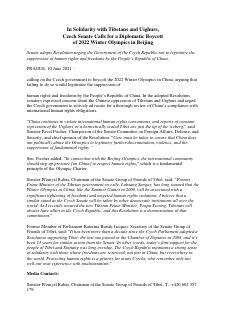
Czech Senate resolution on the diplomatic boycott of 2022 Winter Olympics in China
- Country
- EU Member States: 🇨🇿 Czechia
- National Institution
- Czechia: Czech Senate
- Date
- Jun 10, 2021
- Topic
- Human Rights
- Summary
The resolution urges Czech political leaders to boycott the 2022 Winter Olympics in China over Beijing’s human rights abuses, in particular against Tibetans and Uyghurs.
The resolution recalls the experience of the 2008 Beijing Summer Olympic Games, when China failed to uphold its commitment to hold the games as “free and open” and misused them to further restrict rights and freedoms.
It also points to the “massive” violations of human rights and freedoms in China — particularly against Tibetans and Uyghurs — and calls on the Czech government to “systematically” raise the human rights situation in China in multilateral fora such as the UN Human Rights Council.
- Preview

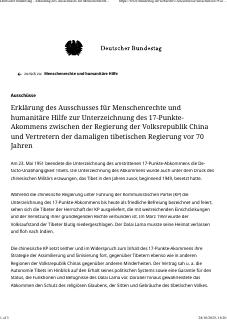
German Bundestag's Committee for Human Rights and Humanitarian Aid's statement on the signing of the 17-Point Agreement between the government of the People’s Republic of China and representatives of the then Tibetan government 70 years ago
- Country
- EU Member States: 🇩🇪 Germany
- National Institution
- Germany: German Bundestag's Committee on Human Rights and Humanitarian Aid
- Date
- May 19, 2021
- Topic
- Human Rights
- Summary
The declaration sharply criticizes the policies of the Chinese Communist Party in Tibet and recalls the controversial end of Tibet’s de facto independence 70 years ago.
- Source
- German Bundestag
- Preview

Answer to a parliamentary question on torture in Tibet
- EU Institution
- EU Commission & EU High Representative for Foreign Affairs and Security Policy (HR/VP)
- Document Type
- Answer to Parliamentary Questions
- Date
- May 17, 2021
- Topic
- Human Rights
- Summary
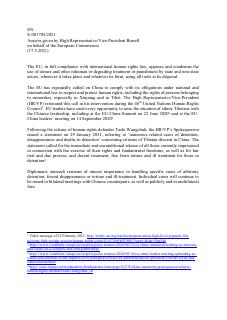
In this answer to a parliamentary question tabled by 12 Members of the European Parliament (Question E-001705/2021), the EU HR/VP on behalf of the European Commission states that the EU condemns torture and other forms of inhuman or degrading treatment and continues to call on China to respect its human rights obligations, including the rights of minorities in Tibet and Xinjiang.
The Commission notes that EU leaders have repeatedly raised the situation of Tibetans with Chinese authorities and that the EU has called for the release of those detained for exercising their fundamental rights, as well as for fair trials and protection from torture and ill-treatment in detention.
The EU confirms that cases of arbitrary detention, enforced disappearance, torture, and ill-treatment will continue to be raised in bilateral and multilateral engagements with China.
- Source
- European Parliament
- Preview

Answer to a parliamentary question on Chinese labour camps in Tibet
- EU Institution
- EU Commission & EU High Representative for Foreign Affairs and Security Policy (HR/VP)
- Document Type
- Answer to Parliamentary Questions
- Date
- Apr 19, 2021
- Topic
- Forced Labour
- Human Rights
- Summary
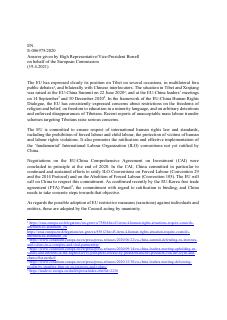
In this answer to a parliamentary question tabled by 10 Members of the European Parliament (Question E-006975/2020), the EU HR/VP on behalf of the European Commission states that the EU has repeatedly raised concerns over the human rights situation in Tibet, including restrictions on religious freedom, minority language education, arbitrary detentions, enforced disappearances, and reports of mass labour transfer schemes targeting Tibetans. The Commission reaffirms the EU’s commitment to combating forced labour and promoting the ratification and implementation by China of relevant International Labour Organization conventions. It also notes that, under the EU–China Comprehensive Agreement on Investment, China committed to continued efforts to ratify ILO conventions on forced labour, and that the EU will call on China to uphold this commitment. Any EU sanctions against individuals or entities would require a unanimous decision by the Council.
- Source
- European Parliament
- Preview

Swiss Government China Strategy 2021-2024
- Country
- Non EU Member States: 🇨🇭 Switzerland
- National Institution
- Switzerland: Swiss Federal Council
- Date
- Mar 19, 2021
- Topic
- Human Rights
- Summary
The strategy highlights that the situation has declined markedly in China in terms of freedom of expression, protection of the private sphere, respect for the rights of communities and the protection of human rights defenders. The strategy explicitly mentions the “stronger pressure” exerted on “minorities” - in particular on Tibetans and Uyghurs.
- Source
- Swiss Government
- Preview

EEAS Spokesperson statement on the release of human rights defender Tashi Wangchuk
- EU Institution
- European External Action Service
- Document Type
- Statement/Declaration/Speech
- Date
- Jan 29, 2021
- Topic
- Individual Cases
- Summary
The statement acknowledges the release of Tashi Wangchuk after her served a five-year sentence for peacefully advocating for Tibetan language rights.
It calls on China to ensure his release is unconditional and that he is able to enjoy his fundamental freedoms, and to investigate alleged mistreatment during detention.
- Preview

French Minister for Foreign Affairs answer to a parliamentary question on programs of forced labour in Tibet
- Country
- EU Member States: 🇫🇷 France
- National Institution
- France: French Ministry of Foreign Affairs
- Date
- Jan 7, 2021
- Topic
- Forced Labour
- Human Rights
- Sino-Tibetan dialogue
- Summary
In an answer to a parliamentary question tabled in the Senate (Question 18437), the French Ministry for Europe and Foreign Affairs stated that it was “particularly concerned” by elements pointing to forced labour practices and control of minorities in Tibet comparable to those observed in Xinjiang. France said it regularly raises its concerns about human rights in the Tibet Autonomous Region at high-level bilateral meetings and in multilateral fora, including at the United Nations Human Rights Council and during China’s Universal Periodic Review. It also called on French companies to exercise vigilance in their supply chains under the 2017 duty of vigilance law and reiterated its call for the resumption of dialogue between the envoys of the Dalai Lama and the Chinese authorities.
- Source
- French Senate
- Preview

Answer to a parliamentary question on coercive labour programmes in Tibet
- EU Institution
- EU Commission & EU High Representative for Foreign Affairs and Security Policy (HR/VP)
- Document Type
- Answer to Parliamentary Questions
- Date
- Jan 5, 2021
- Topic
- Forced Labour
- Human Rights
- Summary
In this answer to a parliamentary question tabled by 14 Members of the European Parliament (Question E-005907/2020), the EU HR/VP on behalf of the European Commission reiterates that the EU has consistently raised concerns with the Chinese authorities over the human rights situation in Tibet and that reports of forced labour targeting Tibetans "add to the concerns already expressed by the EU"
The HR/VP also underlines that the EU continues to call on China to ratify key International Labour Organization conventions on forced labour and notes that any decision to impose EU sanctions would require unanimous agreement by the Council.
- Source
- European Parliament
- Preview

Answer to a parliamentary question on the militarised educational and training system in Tibet
- EU Institution
- EU Commission & EU High Representative for Foreign Affairs and Security Policy (HR/VP)
- Document Type
- Answer to Parliamentary Questions
- Date
- Jan 4, 2021
- Topic
- Forced Labour
- Summary
In this answer to a parliamentary question tabled by 9 Members of the European Parliament (Question E-005903/2020), the EU HR/VP on behalf of the European Commission states that he EU has "clearly and repeatedly expressed concerns over the human rights situation in Tibet in bilateral contacts with China and in multilateral fora.
He highlights that the EU raised its concerns with China in different frameworks, including at the UN Human Rights Council, the EU–China Summit and the EU–China leaders’ meeting.
He further notes that, in the framework of the EU–China Human Rights Dialogue, the EU has consistently expressed concerns regarding restrictions on freedom of religion or belief, the right to education in a minority language, and arbitrary arrests, detentions and disappearances of Tibetans, while reports of mass labour transfer schemes targeting Tibetans have added to the EU’s existing concerns.
- Source
- European Parliament
- Preview

Answer to a parliamentary question on the Tibet Autonomous Region's ‘ethnic unity’ legislation
- EU Institution
- EU Commission & EU High Representative for Foreign Affairs and Security Policy (HR/VP)
- Document Type
- Answer to Parliamentary Questions
- Date
- Jul 24, 2020
- Topic
- Assimilation
- Summary
In this answer to a parliamentary question tabled by a Member of the European Parliament (Question E-003247/2020), the EU HR/VP on behalf of the European Commission states that the EU has repeatedly raised concerns over restrictions on freedom of religion or belief and minority rights in Tibet, including the situation of prisoners, minority rights, and the lack of reciprocal access to the region. The Commission notes that these issues were raised in the EU–China Human Rights Dialogue and in high-level meetings, including the Strategic Dialogue between HR/VP Borrell and Chinese Foreign Minister Wang Yi and the EU–China Summit in June 2020.
The European External Action Service confirms that it continues to monitor developments related to Tibet and the possible implications of China–Nepal cooperation agreements for the Tibetan community in Nepal.
- Source
- European Parliament
- Preview

Answer to a parliamentary question on Chinese legislation impacting the issue of succession of the Dalai Lama and Tibetan Buddhist leaders
- EU Institution
- EU Commission & EU High Representative for Foreign Affairs and Security Policy (HR/VP)
- Document Type
- Answer to Parliamentary Questions
- Date
- Jul 16, 2020
- Topic
- Dalai Lama
- Summary
In this answer to a parliamentary question tabled by 5 Members of the European Parliament (Question E-002786/2020/rev.1), the EU HR/VP on behalf of the European Commission states that the EU has repeatedly raised concerns over restrictions on freedom of religion or belief and minority rights in Tibet, including during HR/VP Borrell’s Strategic Dialogue with Chinese Foreign Minister Wang Yi in June 2020. He highlights that the selection of religious leaders should take place without government interference and in accordance with religious norms, noting that China’s revised regulations on religious affairs raise concerns in this regard. The Commission further recalls that, in the framework of the EU–China Human Rights Dialogue, the EU has repeatedly called on China to respect the succession process of the Dalai Lama and confirms that it will continue to follow the issue closely.
- Source
- European Parliament
- Preview

Answer to a parliamentary question on repression encouraged by the Chinese authorities in Tibet, on the pretext of tackling COVID-19
- EU Institution
- EU Commission & EU High Representative for Foreign Affairs and Security Policy (HR/VP)
- Document Type
- Answer to Parliamentary Questions
- Date
- Jul 7, 2020
- Topic
- Repression
- Summary
In this answer to a parliamentary question tabled by a Member of the European Parliament (Question E-002809/2020), the EU HR/VP on behalf of the European Commission states that the EU expressed concern for growing restrictions on freedom of expression and access to information in relation to the management of the COVID-19 outbreak.
The Commission also notes that the EU has called on China to respect the rights of minorities in Tibet in bilateral contacts and at the UN Human Rights Council, and confirms that these concerns will continue to be raised through the EU–China Human Rights Dialogue and other high-level engagements.
- Source
- European Parliament
- Preview

Answer to a parliamentary question on Chinese interference in the succession of the Dalai Lama
- EU Institution
- EU Commission & EU High Representative for Foreign Affairs and Security Policy (HR/VP)
- Document Type
- Answer to Parliamentary Questions
- Date
- Apr 3, 2020
- Topic
- Dalai Lama
- Summary
In this answer to a parliamentary question tabled by 5 Members of the European Parliament (Question E-000811/2020), the EU HR/VP states that the EU has repeatedly raised concerns over restrictions on freedom of religion or belief and called on China to respect the rights of persons belonging to minorities, particularly in Xinjiang and Tibet.
He notes that, in the framework of the EU–China Human Rights Dialogue, the EU has consistently expressed its expectation that China respect the succession process of the Dalai Lama in accordance with Tibetan Buddhist norms, a position also reiterated during the 2019 Human Rights Dialogue. He states that the EU will continue to express its position on this matter.
- Source
- European Parliament
- Preview

Answer to a parliamentary question on access to Tibet and reciprocity
- EU Institution
- EU Commission & EU High Representative for Foreign Affairs and Security Policy (HR/VP)
- Document Type
- Answer to Parliamentary Questions
- Date
- Mar 9, 2020
- Topic
- Access to Tibet
- Summary
In this answer to a parliamentary question tabled by a Member of the European Parliament (Question E-004532/2019/rev.1), the EU HR/VP on behalf of the European Commission states that the EU has repeatedly raised concerns over restrictions on freedom of religion or belief in Tibet and called on China to respect its human rights obligations. The Commission notes that the issue of reciprocal access to Tibet has been raised with Chinese authorities, including by the former HR/VP Mogherini in the European Parliament, and confirms that the EU will continue to advocate for reciprocal access as part of the EU–China Human Rights Dialogue and broader human rights engagement with China.
- Source
- European Parliament
- Preview

German Minister for Foreign Affairs answer to a parliamentary question on the succession of the Dalai Lama
- Country
- EU Member States: 🇩🇪 Germany
- National Institution
- Germany: German Ministry of Foreign Affairs
- Date
- Feb 26, 2020
- Topic
- Dalai Lama
- Religious Freedom
- Summary
In an answer to a parliamentary question, German Minister for Foreign Affairs Niels Annen stated:
"The Federal Government believes that religious communities should be able to govern their own affairs autonomously. This includes the right to appoint their own religious leaders. The Federal Government respects the Dalai Lama as the head of Lamaist Buddhism. At the same time, it considers Tibet to be part of the People's Republic of China."
- Source
- German Bundestag
- Preview

Belgian Minister for Foreign Affairs answer to a parliamentary question on the succession of the Dalai Lama (2020)
- Country
- EU Member States: 🇧🇪 Belgium
- National Institution
- Belgium: Belgian Ministry of Foreign Affairs
- Date
- Jan 21, 2020
- Topic
- Dalai Lama
- Human Rights
- Religious Freedom
- Summary
In an answer to a parliamentary question (Human Rights Situation in Tibet - 55002105C), Belgian Minister for Foreign Affairs Philippe Goffin stated:
"Regarding the reincarnation of the Dalai Lama as a religious leader and based on the principle of freedom of religion, it is logically up to the Tibetan religious community to designate his successor without interference from temporal authorities."
- Preview

Dutch Ministry of Foreign Affairs letter on China to the Tweede Kamer - including the succession of the Dalai Lama
- Country
- EU Member States: 🇳🇱 Netherlands
- National Institution
- Netherlands: Dutch Ministry of Foreign Affairs
- Date
- Nov 11, 2019
- Topic
- Dalai Lama
- Human Rights
- Religious Freedom
- Summary
In a letter to the President of the Tweede Kamer, the Dutch Minister of Foreign Affairs Stef Blok stated:
"The government's position is that it is up to the Tibetan religious community itself to appoint a future successor to the Dalai Lama."
- Source
- Dutch Tweede Kamer
- Preview

Swedish Ministry of Foreign Affairs Communication of 26 September 2019 on Approach to matters relating to China
- Country
- EU Member States: 🇸🇪 Sweden
- National Institution
- Sweden: Swedish Ministry of Foreign Affairs
- Date
- Sep 26, 2019
- Topic
- Human Rights
- Transnational Repression
- Summary
In this Communication to the Riksdag, the Government outlines Sweden’s relations with China and the Government’s approach to matters relating to China.
On Tibet, it says: -"The situation of minorities, particularly Muslim Uighurs, in Xinjiang is very serious. A large number of people have been forced into ‘re-education camps’, and restrictions on religion and freedom of movement are particularly prevalent. Disproportionately tough penalties for crimes against national security remain more common in cases concerning minorities, particularly in Xinjiang and Tibet." -"Chinese intelligence activities also target Chinese refugees and organisations working for Tibet, Xinjiang and Taiwan, for example, and political decision-making. China occasionally attempts to counteract the exercise of freedom of expression and assembly in Sweden with respect to issues relating to China."
- Preview

Answer to a parliamentary question on reproductive rights in Tibet
- EU Institution
- EU Commission & EU High Representative for Foreign Affairs and Security Policy (HR/VP)
- Document Type
- Answer to Parliamentary Questions
- Date
- Jun 6, 2019
- Topic
- Human Rights
- Summary
In this answer to a parliamentary question tabled by a Member of the European Parliament (Question E-001299-19), the EU HR/VP states that the EU is monitoring the situation in Tibet and has consistently called on China to respect the rights of persons belonging to minorities, including in Tibet and Xinjiang.
She notes that, during the EU–China Human Rights Dialogue in April 2019, the EU raised concerns regarding the situation in Tibet, including women’s rights and reproductive rights in the context of China’s former one-child policy.
She confirms that the EU will continue its bilateral engagement with China on these issues, as well as monitoring developments related to reproductive rights and women’s rights in Tibet.
- Source
- European Parliament
- Preview

European Parliament resolution of 18 April 2019 on China, notably the situation of religious and ethnic minorities
- EU Institution
- European Parliament
- Document Type
- Resolution
- Date
- Apr 18, 2019
- Topic
- Access to Tibet
- Individual Cases
- Religious Freedom
- Summary
The resolution condemns China’s continued repression of Tibetans, including restrictions on freedom of religion, expression, and movement. It denounces the intensified surveillance and control measures in Tibet, arbitrary detentions, and the criminalisation of non-violent dissent as “separatism.” The European Parliament calls on China to uphold Tibetans’ linguistic, cultural and religious rights, end settlement policies that disadvantage Tibetans, and allow unfettered access to Tibet for journalists and international observers. It urges China to respect constitutional guarantees and international human rights obligations. It also calls for the release of detained Tibetan activists, writers and religious figures, including Tashi Wangchuk and Lobsang Dargye.
- Source
- European Parliament
- Preview

EU Press Release following 37th EU-China Human Rights Dialogue
- EU Institution
- European External Action Service
- Document Type
- Press Release
- Date
- Apr 2, 2019
- Topic
- Human Rights
- Individual Cases
- Summary
The press release states that the Human Rights Dialogue addressed the issues of the protection of freedom of religion and belief, the rights of persons belonging to minorities, "and the situation in Xinjiang and Tibet".
It further indicates that the EU raised individual cases and called for the release of Tibetan activists, writers and religious figures who face criminal charges or have been imprisoned for exercising their right to freedom of expression, including Tashi Wangchuk and Lobsang Dargye.
- Preview

German Bundestag's Committee for Human Rights and Humanitarian Aid's joint declaration on the 60th anniversary of the uprising in Tibet
- Country
- EU Member States: 🇩🇪 Germany
- National Institution
- Germany: German Bundestag's Committee on Human Rights and Humanitarian Aid
- Date
- Mar 25, 2019
- Topic
- Human Rights
- Summary
In this joint declaration, the German Bundestag's Committee for Human Rights and Humanitarian Aid expresses solidarity with Tibetans and raises concerns over threats to Tibetan culture, language, identity, and religion. It highlights the continued impact of repression, including more than 150 self-immolations, and calls on the international community to respond to the situation.
The Committee supports the Dalai Lama’s Middle Way Approach seeking meaningful autonomy for Tibet within China and calls on the Chinese government to respect the rights of Tibetans, end restrictions on religious and personal freedoms, stop repression, and resume dialogue with Tibetan representatives.
- Source
- ICT
European Parliament resolution of 12 September 2018 on the state of EU-China relations
- EU Institution
- European Parliament
- Document Type
- Resolution
- Date
- Sep 12, 2018
- Topic
- Access to Tibet
- Human Rights
- Sino-Tibetan dialogue
- Summary
The resolution paragraph 63. states "Urges China to review its policies in Tibet; calls on China to review and amend the laws, regulations and measures passed in recent years that severely limit the exercise of civil and political rights of Tibetans, including their freedom of expression and their religious freedom; urges the Chinese leadership to pursue development and environmental policies that respect the economic, social and cultural rights of Tibetans and are inclusive of local populations, in line with the United Nations Sustainable Development Goals; calls on the Chinese government to investigate the ongoing cases of enforced disappearances, torture and ill-treatment of Tibetans and to respect their rights to freedom of association, peaceful assembly and freedom of religion and belief, in line with international human rights standards; stresses that the degradation of human rights in Tibet must be systematically raised at each EU-China Summit; calls for the resumption of a constructive and peaceful dialogue between the Chinese authorities and representatives of the Tibetan people; urges China to give EU diplomats, journalists and citizens unfettered access to Tibet in reciprocity to the free and open access to the entire territories of the EU Member States that Chinese travellers enjoy; calls on the Chinese authorities to allow Tibetans in Tibet to travel freely and to respect their right to freedom of movement; urges the Chinese authorities to allow independent observers, including the United Nations High Commissioner for Human Rights, to access Tibet; urges the EU institutions to take the issue of access to Tibet into serious consideration in the discussions on the EU-China visa facilitation agreement"
- Source
- European Parliament
- Preview

EU Press Release following 36th EU-China Human Rights Dialogue
- EU Institution
- European External Action Service
- Document Type
- Press Release
- Date
- Jul 10, 2018
- Topic
- Human Rights
- Individual Cases
- Summary
The press release states that the dialogue included discussions on the promotion of freedom of religion and belief, and the rights of persons belonging to minorities, "especially Tibetans and Uighurs".
It also indicates that the EU asked for the release of Tibetan activists, writers and religious figures who face criminal charges or have been imprisoned for exercising their right to freedom of expression, including Tashi Wangchuk, and Tashi Dorje.
- Preview

Answer to a parliamentary question on Tibet
- EU Institution
- EU Commission & EU High Representative for Foreign Affairs and Security Policy (HR/VP)
- Document Type
- Answer to Parliamentary Questions
- Date
- Apr 17, 2018
- Topic
- Human Rights
- Summary
In this answer to a parliamentary question tabled by a Member of the European Parliament (Question E-000798-18), the EU HR/VP on behalf of the European Commission states that the promotion and protection of human rights remains an integral part of the EU’s engagement with China.
She highlights that, during the 19th EU–China Summit and the subsequent EU–China Human Rights Dialogue in June 2017, the EU raised concerns regarding the human rights situation in Tibet, including restrictions on freedom of expression, freedom of religion or belief, the demolitions at Larung Gar Academy, and the expulsion of monastic individuals.
She notes that the EU called for the release of Tibetan activists, writers, and religious figures detained in connection with the exercise of their human rights, and confirms that it will continue to urge China to respect human rights in accordance with international obligations.
- Source
- European Parliament
- Preview

European Parliament resolution of 18 January 2018 on the cases of the human rights activists Wu Gan, Xie Yang, Lee Ming-che and Tashi Wangchuk, and the Tibetan monk Choekyi
- EU Institution
- European Parliament
- Document Type
- Resolution
- Date
- Jan 18, 2018
- Topic
- Individual Cases
- Summary
XXX
- Source
- European Parliament
- Preview

Answer to a parliamentary question on Tibet
- EU Institution
- EU Commission & EU High Representative for Foreign Affairs and Security Policy (HR/VP)
- Document Type
- Answer to Parliamentary Questions
- Date
- Jan 12, 2018
- Topic
- Human Rights
- Summary
In this answer to a parliamentary question tabled by a Member of the European Parliament (Question E-006541-17), the EU HR/VP on behalf of the European Commission states that the EU raised concerns over the human rights situation in China, including restrictions on freedom of expression and the treatment of ethnic and religious minorities, particularly in Tibet and Xinjiang, during the EU–China Summit and subsequent EU–China Human Rights Dialogue in June 2017.
She highlights that, during the Human Rights Dialogue, the EU raised concerns regarding freedom of expression, freedom of religion or belief, the demolitions at Larung Gar Buddhist Academy, and the expulsion of monastic individuals in Tibet. She also also notes that the EU called for the release of individuals detained in connection with the exercise of their human rights, including Tibetan activists, writers, and religious figures, and confirms that the EU will continue to urge China to respect human rights in line with international obligations.
- Source
- European Parliament
- Preview

EU Press Release following 35th EU-China Human Rights Dialogue
- EU Institution
- European External Action Service
- Document Type
- Press Release
- Date
- Jun 23, 2017
- Topic
- Human Rights
- Individual Cases
- Summary
The press release states that the dialogue discussed "the rights of persons belonging to minorities, especially in Tibet and Xinjiang".
It also indicates that the EU raised the cases of Tibetan activists, writers and religious figures who face criminal charges or have been imprisoned for exercising their right to freedom of expression, including Tashi Wangchuk, Druklo and Lobsang Kunchok.
- Preview

European Parliament resolution of 15 December 2016 on the cases of the Larung Gar Tibetan Buddhist Academy and Ilham Tohti
- EU Institution
- European Parliament
- Document Type
- Resolution
- Date
- Dec 15, 2016
- Topic
- Religious Freedom
- Summary
XXXX
- Source
- European Parliament
- Preview

Answer to a parliamentary question on Anti-terrorism law in China
- EU Institution
- EU Commission & EU High Representative for Foreign Affairs and Security Policy (HR/VP)
- Document Type
- Answer to Parliamentary Questions
- Date
- Oct 18, 2016
- Topic
- Human Rights
- Summary
In this answer to a parliamentary question tabled by a Member of the European Parliament, the EU HR/VP states that:
-The EU raised concerns about China’s Counter-Terrorism Law during the public consultation process and after its adoption, warning that its vague definition of terrorism could be used to target ethnic and religious minorities, including Tibetans. The Commission notes that the Chinese authorities did not provide a formal response to these concerns.
-HR/VP Mogherini raised the issue directly with senior Chinese officials, stressing the EU’s concerns about the law’s definition of terrorism and the need for China to comply with international law.
-During the 2015 EU–China Human Rights Dialogue, the EU raised the situation in Tibet, asking what measures China intended to take to address underlying grievances, including restrictions on the freedom to practice Tibetan religion and culture.
- Source
- European Parliament
- Preview

Answer to a parliamentary question on Chinese occupation of Tibet
- EU Institution
- EU Commission & EU High Representative for Foreign Affairs and Security Policy (HR/VP)
- Document Type
- Answer to Parliamentary Questions
- Date
- Mar 16, 2016
- Topic
- Human Rights
- Summary
In this answer to a parliamentary question tabled by a Member of the European Parliament (Question E-000218-16), the EU HR/VP states that the human rights situation in Tibet is systematically raised with the Chinese authorities through the EU–China Human Rights Dialogue. She notes that the EU has raised concerns about restrictions on freedom of religion and culture, as well as the underlying grievances that have contributed to Tibetan self-immolations.
She also highlights visits by the EU Special Representative for Human Rights to the Tibet Autonomous Region and Qinghai, during which concerns about developments in monasteries and the treatment of self-immolators, their families, and communities were discussed with Chinese authorities.
She further notes that the EU systematically raises the human rights situation in China at the UN Human Rights Council, with specific reference to Tibet and Xinjiang.
- Source
- European Parliament
- Preview

Answer to a parliamentary question on Tibet and Tibetan independence
- EU Institution
- EU Commission & EU High Representative for Foreign Affairs and Security Policy (HR/VP)
- Document Type
- Answer to Parliamentary Questions
- Date
- Mar 14, 2016
- Topic
- Human Rights
- Sino-Tibetan dialogue
- Summary
In this answer to a parliamentary question tabled by a Member of the European Parliament (Question E-000233-16), the EU HR/VP states that the EU has called on Chinese authorities to respect the human rights of the Tibetan people, including their rights to freedom of expression and assembly, to practice their religion, preserve their culture, and use their own language.
She also notes that the EU has urged China to allow unrestricted access for foreign diplomats and journalists to Tibetan autonomous areas.
She further reiterates the EU’s support for the resumption of dialogue between Chinese authorities and representatives of the Dalai Lama on the basis of the Middle Way Approach.
- Source
- European Parliament
- Preview

European Parliament resolution of 16 December 2015 on EU-China relations
- EU Institution
- European Parliament
- Document Type
- Resolution
- Date
- Dec 16, 2015
- Topic
- Access to Tibet
- Environment
- Human Rights
- Self-immolations
- Sino-Tibetan dialogue
- Summary
The resolution expresses deep concern over the deteriorating human rights situation in Tibet, including severe restrictions on freedom of religion, expression and movement. It condemns the criminalisation of non-violent dissent, intensified surveillance, and the forced resettlement of Tibetan nomads. The European Parliament calls on China to respect Tibetans’ linguistic, cultural and religious rights, halt “patriotic education” campaigns in monasteries, and end policies undermining Tibetan identity. It urges renewed dialogue with the Dalai Lama’s representatives based on the Middle Way Approach and calls for unhindered access to Tibet for journalists, diplomats and international observers.
- Source
- European Parliament
- Preview

Answer to a parliamentary question on EU-China Human Rights Dialogue - Self-immolations in Tibet
- EU Institution
- EU Commission & EU High Representative for Foreign Affairs and Security Policy (HR/VP)
- Document Type
- Answer to Parliamentary Questions
- Date
- Dec 16, 2015
- Topic
- Human Rights
- Self-immolations
- Summary
In this answer to a parliamentary question tabled by a Member of the European Parliament (Question E-002309-15), the EU HR/VP states that
-The human rights situation in Tibet was raised during the 33rd and 34th EU–China Human Rights Dialogues, including concerns about the rights of Tibetans, restrictions on religious and cultural freedom, individual cases, and the underlying grievances that have contributed to self-immolations.
-The EU Special Representative for Human Rights visited the Tibet Autonomous Region and Qinghai in 2013 and followed up during a second visit in 2015 by raising questions with the Chinese authorities about developments in monasteries and the situation of self-immolators, their families, and communities.
-The EU is aware of increased state control over Tibetan monasteries, including the permanent stationing of government and Party officials in monasteries and the reported closure of several monasteries in Driru County, issues which were also raised by the EU Special Representative during his visit.
-HR/VP Mogherini is kept fully informed of developments in Tibet.
- Source
- European Parliament
- Preview

EU Press Release following 34th EU-China Human Rights Dialogue
- EU Institution
- European External Action Service
- Document Type
- Press Release
- Date
- Dec 2, 2015
- Topic
- Human Rights
- Summary
The press release states that the EU raised concerns about recent developments in China, including "the rights of persons belonging to minorities, especially in Tibet and Xinjiang".
- Preview

EEAS Spokesperson statement following the death in prison of Tenzin Delek Rinpoche
- EU Institution
- European External Action Service
- Document Type
- Statement/Declaration/Speech
- Date
- Jul 15, 2015
- Topic
- Individual Cases
- Summary
The statement reads: "Following the death in prison of Tenzin Delek Rinpoche, a Tibetan lama who has been a prisoner since 2002, we express our deepest condolences to his family, friends and supporters. The EU had consistently called for his release or adequate medical treatment. We expect the Chinese authorities to investigate and make public the circumstances surrounding his death."
- Source
- EEAS
- Preview

Answer to a parliamentary question on human rights abuses in Tibet
- EU Institution
- EU Commission & EU High Representative for Foreign Affairs and Security Policy (HR/VP)
- Document Type
- Answer to Parliamentary Questions
- Date
- Jul 14, 2015
- Topic
- Human Rights
- Summary
In this answer to a parliamentary question tabled by a Member of the European Parliament (Question E-005249/2015), EU Commissioner Malmström on behalf of the European Commission states that the human rights situation in Tibet is systematically raised with Chinese authorities through the EU–China Human Rights Dialogue.
He notes that Tibet was also raised by HR/VP Mogherini during the EU–China Strategic Dialogue in Beijing on 5 May, and that references to the human rights situation in Tibet are regularly included in EU statements during sessions of the UN Human Rights Council.
The Commissioner further clarifies that the EU–China Investment Agreement is not considered the appropriate instrument to address the situation in Tibet, given its limited scope.
- Source
- European Parliament
- Preview

Remarks by European Council President Donald Tusk following the 17th EU-China summit
- EU Institution
- European Council/Council of the European Union/EU Presidency
- Document Type
- Press Release
- Date
- Jun 2, 2015
- Topic
- Dalai Lama
- Human Rights
- Summary
In his remarks at the press conference following the 17th EU-China Summit, European Council President Donald Tusk stated:
"I expressed our concerns on freedom of expression and association in China, including the situation of the persons belonging to minorities such as Tibetans and Uighurs. In that context, I have encouraged China to resume a meaningful dialogue with the Dalai Lama's representatives."
- Source
- European Council
- Preview

EU Press Release following 33rd EU-China Human Rights Dialogue
- EU Institution
- European External Action Service
- Document Type
- Press Release
- Date
- Dec 9, 2014
- Topic
- Human Rights
- Summary
The press release states that the dialogue "allowed the two sides to have a detailed exchange of views on a wide range of human rights issues" including "the rights of persons belonging to minorities, especially in Tibet and Xinjiang".
- Preview

European Parliament resolution of 11 December 2013 on the Annual Report on Human Rights in the World 2012 and the European Union's policy on the matter
- EU Institution
- European Parliament
- Document Type
- Resolution
- Date
- Dec 11, 2013
- Topic
- Education
- Human Rights
- Religious Freedom
- Sino-Tibetan dialogue
- Summary
The resolution (para 71): -urges China to "engage seriously with the Tibetan people in order to assess the underlying causes of the high number of self-immolations". -It condemns the forced resettlement and relocation of Tibetan nomads. -It calls on China to put an end to its restrictive policies on Tibetan Buddhism.
-It stresses the need for "improvement of the education system with special regard to bilingual education".
- Source
- European Parliament
- Preview

European Parliament resolution of 24 October 2013 on the Annual Report from the Council to the European Parliament on the Common Foreign and Security Policy
- EU Institution
- European Parliament
- Document Type
- Resolution
- Date
- Oct 24, 2013
- Topic
- Human Rights
- Religious Freedom
- Summary
The resolution expresses concern at China’s "continuing violation of human rights and cultural and religious minority rights, namely in Tibet."
- Source
- European Parliament
- Preview

EU Press Release following the visit of the EU Special Representative for Human Rights visit to China and Tibet in September 2013
- EU Institution
- European External Action Service
- Document Type
- Press Release
- Date
- Sep 20, 2013
- Topic
- Human Rights
- Summary
The press release by the European External Action Service reports on the visit of the EU Special Representative for Human Rights' visit to China and Tibet including five days in the "ethnic Tibetan areas of Qinghai Province and the Tibet Autonomous Region" in September 2013.
- Source
- ICT
German Bundestag's Committee for Human Rights and Humanitarian Aid's joint declaration on the self-immolations of Tibetans
- Country
- EU Member States: 🇩🇪 Germany
- National Institution
- Germany: German Bundestag's Committee on Human Rights and Humanitarian Aid
- Date
- Apr 24, 2013
- Topic
- Self-immolations
- Summary
In this joint declaration, the German Bundestag’s Committee for Human Rights and Humanitarian Aid expresses deep concern over the increasing number of self-immolations in Tibet and calls on the Chinese leadership to respect the human rights, religious freedom, and cultural identity of Tibetans.
The Committee states that the self-immolations reflect deep frustration over restrictions on freedom and the lack of respect for Tibetan culture and religion, and urges China to address the underlying causes through reforms and by ending repression and state control over religious life. It calls for the resumption of dialogue between Chinese authorities and Tibetan representatives, while urging Tibetans to refrain from self-immolation and other forms of self-harm.
The declaration also supports calls by international actors, including the UN High Commissioner for Human Rights, the European Parliament, and the EU High Representative, for improved access to Tibet for diplomats, parliamentarians, and journalists, and calls on the German Government to continue raising Tibet-related concerns through bilateral and international channels, including EU–China human rights mechanisms.
- Source
- ICT
European Parliament resolution of 14 March 2013 on EU-China relations
- EU Institution
- European Parliament
- Document Type
- Resolution
- Date
- Mar 14, 2013
- Topic
- Access to Tibet
- Human Rights
- Summary
The resolution notes that "since 2009 at least 90 Tibetans have self-immolated in Tibetan-populated areas".
It urges China to meaningfully engage the Tibetan (and Uyghur) people in governance issues, "including resource management and economic development priorities, and respecting rather than diluting cultural elements such as language and religion".
It further asserts that China will not achieve lasting stability in Tibet "through forcible assimilation, cultural destruction or repressive police and security methods" but "only by seriously addressing all indigenous complaints, and urges China to put an end to the ban on independent observers visits to the region.
- Source
- European Parliament
- Preview

Speech by Commissioner Füle on behalf of HR/VP Catherine Ashton on EU-China relations in the European Parliament
- EU Institution
- EU Commission & EU High Representative for Foreign Affairs and Security Policy (HR/VP)
- Document Type
- Statement/Declaration/Speech
- Date
- Mar 13, 2013
- Topic
- Human Rights
- Summary
In this speech given in the European Parliament (which was debating a resolution on EU-China relations), Commissioner Füle on behalf of HR/VP Catherine Ashton XXXXXXXX.
- Source
- European Parliament
- Preview

UK Foreign Office Minister statement on the self-immolations in Tibet
- Country
- Non EU Member States: 🇬🇧 United Kingdom
- National Institution
- United Kingdom: UK Foreign Office
- Date
- Dec 17, 2012
- Topic
- Self-immolations
- Summary
This was published under the 2010 to 2015 Conservative and Liberal Democrat coalition government.
Following a European Union statement on self-immolations in Tibet, UK Foreign Office Minister Hugo Swire said:
“We strongly support the recent statement from Baroness Ashton about the situation in Tibet. We continue to have serious concerns about the human rights situation there, including the self-immolations in Tibetan regions.
“We urge the Chinese authorities to exercise restraint. At the same time, I join Baroness Ashton in calling on Tibetans not to resort to extreme forms of protest such as self-immolation, and urge their community and religious leaders to use their influence to stop this tragic loss of life. We strongly support the resumption of meaningful dialogue to resolve the underlying grievances of Tibetan communities.
“I also urge the Chinese government to ensure unrestricted access to the Tibetan Autonomous Region and other Tibetan areas of China for diplomats, international media and other concerned parties. We believe a long term solution is best achieved through respect for universal principles of human rights and genuine autonomy for Tibet within the framework of the Chinese constitution.”
- Source
- UK Government
- Preview

Declaration by HR/VP Catherine Ashton, on behalf of the European Union on Tibetan self-immolations
- EU Institution
- EU Commission & EU High Representative for Foreign Affairs and Security Policy (HR/VP)
- Document Type
- Statement/Declaration/Speech
- Date
- Dec 14, 2012
- Topic
- Self-immolations
- Summary
In this declaration on behalf of the European Union, the HR/VP expresses deep concern over the increasing number of self-immolations by Tibetans and links the protests to restrictions on expressions of Tibetan identity.
While reaffirming respect for China’s territorial integrity, the EU calls on Chinese authorities to address the underlying causes of Tibetan grievances and ensure respect for Tibetans’ civil, political, economic, social, and cultural rights, including the rights to practice their religion, preserve their culture, and use their language.
The EU urges China to respect freedom of peaceful assembly and expression, release individuals detained for peaceful protests, and allow access to Tibetan autonomous areas for diplomats and international journalists.
The EU also calls on Tibetans to refrain from self-immolation and encourages all parties to resume meaningful dialogue.
- Preview

European Parliament resolution of 13 December 2012 on the Annual Report on Human Rights in the World 2011 and the European Union's policy on the matter
- EU Institution
- European Parliament
- Document Type
- Resolution
- Date
- Dec 13, 2012
- Topic
- Human Rights
- Sino-Tibetan dialogue
- Summary
The resolution notes "targeted policies aimed at marginalising Tibetans and their cultural identity". It calls on China to "engage seriously with the Tibetan people in order to assess the underlying causes of the self-immolations of Tibetan monks and nuns" and reiterates its call for the need to appoint an EU Special Representative for Tibet.
- Source
- European Parliament
- Preview

French Senate resolution of 27 November 2012 on European action in favor of the protection of Tibetan rights
- Country
- EU Member States: 🇫🇷 France
- National Institution
- France: French Senate
- Date
- Nov 27, 2012
- Topic
- Human Rights
- Summary
In this resolution, adopted on 27 November 2012, the French Senate calls on the EU High Representative to make Tibet a priority within the mandate of the EU Special Representative for Human Rights.
It urges the EU to strengthen coordination in promoting the human rights and religious, cultural, and linguistic rights of Tibetans, support the resumption of dialogue between the Chinese government and the Dalai Lama’s representatives to achieve a peaceful solution, and support the Tibetan exile community in preserving Tibetan culture and developing education, healthcare, and sustainable livelihoods.
- Source
- French Senate
- Preview

Luxembourg Chamber of Deputies resolution of 27 June 2012 condemning the relentless repression carried out by the Chinese authorities in Tibet
- Country
- EU Member States: 🇱🇺 Luxembourg
- National Institution
- Luxembourg: Luxembourg Chamber of Deputies
- Date
- Jun 27, 2012
- Topic
- Human Rights
- Self-immolations
- Sino-Tibetan dialogue
- Summary
In this resolution (motion 2308 adopted), the Luxembourg Chamber of Deputies calls on the Government to raise its deep concern with Chinese authorities over the repression in Tibet and to reaffirm Luxembourg’s commitment to human rights, including religious freedom and the protection of Tibetan culture, while respecting China’s territorial integrity.
It urges China to lift restrictions on Tibetan monasteries, end the forced settlement of nomadic communities, and resume dialogue with representatives of the Tibetan people.
The resolution also calls on Luxembourg to advocate within the EU for a common position on human rights in Tibet and to ensure that EU human rights mechanisms address the situation in Tibet, including through the EU–China Human Rights Dialogue and high-level meetings with China.
- Preview

European Parliament resolution of 14 June 2012 on the human rights situation in Tibet
- EU Institution
- European Parliament
- Document Type
- Resolution
- Date
- Jun 14, 2012
- Topic
- Access to Tibet
- Dalai Lama
- Human Rights
- Panchen Lama
- Religious Freedom
- Self-immolations
- Summary
The resolution condemns China’s continued repression in Tibet, including excessive force during the 2008 protests, torture in detention, and restrictions on religion, expression and movement. It calls on China to grant Tibet meaningful autonomy and to resume dialogue with the Dalai Lama’s envoys based on the Middle Way Approach and the 2008 Memorandum on Genuine Autonomy. The European Parliament urges independent investigations into the 2008 crackdown, disclosure of the fate of self-immolation victims and the 11th Panchen Lama, and unhindered access to Tibet for journalists and observers. It also calls for protection of Tibetans’ linguistic, cultural and religious rights and the appointment of an EU coordinator to report regularly on Tibet.
- Source
- European Parliament
- Preview

Speech by HR/VP Catherine Ashton on the situation in Tibet in the European Parliament
- EU Institution
- EU Commission & EU High Representative for Foreign Affairs and Security Policy (HR/VP)
- Document Type
- Statement/Declaration/Speech
- Date
- Jun 12, 2012
- Topic
- Human Rights
- Self-immolations
- Sino-Tibetan dialogue
- Summary
In this speech given in the European Parliament plenary (which was discussing its resolution of 14 June 2012 on the human rights situation in Tibet), HV/VP Ashton voiced the EU's concern over the worsening situation in Tibet. She referred to the wave of self-immolations, mass arrests, and the closure of Tibetan areas to foreigners, highlighting that restrictions on religion, culture, and expression have fuelled Tibetan frustration.
Ashton also criticised the forced resettlement of nomads, the imposition of Mandarin as the main teaching language, and limits on religious practice. While noting China’s efforts to improve living standards, she warned that current development and environmental policies threaten Tibetan identity and culture.
She recalled that these concerns were raised during the EU-China Human Rights Dialogue of 29 May 2012, and urged Beijing to respect Tibetans’ fundamental rights and allow access for diplomats and journalists. Finally, she reiterated the EU’s support for renewed dialogue between the Chinese authorities and the Dalai Lama’s representatives to achieve a lasting solution.
- Preview

Italian Chamber of Deputies' Foreign Affairs Committee's resolution on the repression of the Tibetan people
- Country
- EU Member States: 🇮🇹 Italy
- National Institution
- Italy: Italian Chamber of Deputies' Foreign Affairs Committee
- Date
- Feb 8, 2012
- Topic
- Human Rights
- Sino-Tibetan dialogue
- Summary
In this resolution, the Foreign Affairs Committee of the Italian Chamber of Deputies calls on the Italian Government to raise Tibet-related concerns with China at the EU–China Summit.
It urges China to immediately end violence against Tibetans and Tibetan religious figures, create conditions for dialogue and tolerance, and resume talks with representatives of the Dalai Lama to reach a mutually agreed solution providing genuine autonomy for Tibetans.
The resolution also calls for the reopening of Tibet to the outside world and for free and unconditional access for international media, as well as increased UN monitoring of the human rights situation in Tibet.
- Source
- CTA
European Parliament resolution of 27 October 2011 on Tibet, in particular self-immolation by nuns and monks
- EU Institution
- European Parliament
- Document Type
- Resolution
- Date
- Oct 27, 2011
- Topic
- Dalai Lama
- Religious Freedom
- Self-immolations
- Sino-Tibetan dialogue
- Summary
The resolution condemns China’s crackdown on Tibetan monasteries and the severe restrictions on freedom of religion, expression and movement in Tibetan areas, especially around Kirti Monastery. It expresses deep concern over a wave of self-immolations by monks and nuns protesting Chinese repression. The European Parliament calls on China to lift security measures, reveal the fate of detained monks, and allow access for journalists and human rights observers. It urges China to end “patriotic education” campaigns, respect Tibetan cultural and linguistic rights, and resume dialogue with the Dalai Lama’s representatives toward genuine autonomy. The resolution also calls for EU action, including raising Tibet’s situation at the EU-China Summit and appointing an EU Special Representative for Tibet.
- Source
- European Parliament
- Preview

European Parliament resolution of 7 April 2011 on the ban of the elections for the Tibetan government in exile in Nepal
- EU Institution
- European Parliament
- Document Type
- Resolution
- Date
- Apr 7, 2011
- Topic
- Tibetan Democracy
- Summary
The resolution condemns Nepal’s ban on Tibetan exile elections, imposed under pressure from China, as a violation of fundamental democratic rights. It calls on the Government of Nepal to allow Tibetans in exile to freely organize and participate in their democratic election process, which has existed since 1960. The European Parliament urges Nepal to respect Tibetans’ rights to freedom of expression, assembly, and association, guaranteed by international law, and to include these protections in its new constitution. It calls on Nepal to resist Chinese pressure, uphold the “Gentlemen’s Agreement” on Tibetan refugees, and ensure UNHCR access. The EU is urged to monitor the situation closely and raise the issue with Nepalese and Chinese authorities.
- Source
- European Parliament
- Preview

European Parliament resolution of 16 December 2010 on the Annual Report on Human Rights in the World 2009 and the European Union's policy on the matter
- EU Institution
- European Parliament
- Document Type
- Resolution
- Date
- Dec 16, 2010
- Topic
- Human Rights
- Sino-Tibetan dialogue
- Summary
The resolution express deep concern about the lack of progress of the Sino-Tibetan dialogue, and urges China "to refrain from their oppressive policy in Tibet, which could eventually lead to the annihilation of the Tibetan religion and culture".
- Source
- European Parliament
- Preview

European Parliament resolution of 25 November 2010 on Tibet – plans to make Chinese the main language of instruction
- EU Institution
- European Parliament
- Document Type
- Resolution
- Date
- Nov 25, 2010
- Topic
- Education
- Summary
XXX
- Source
- European Parliament
- Preview

Statement by EESC President Sepi on the resumption of dialogue on Tibet and the consideration of economic and social concerns
- EU Institution
- European Economic and Social Committee
- Document Type
- Statement/Declaration/Speech
- Date
- Jan 28, 2010
- Topic
- Human Rights
- Sino-Tibetan dialogue
- Summary
XXX
- Source
- European Commission
- Preview

Danish Foreign Minister Per Stig Møller's statement on the resumption of the Sino-Tibetan dialogue
- Country
- EU Member States: 🇩🇰 Denmark
- National Institution
- Denmark: Danish Ministry of Foreign Affairs
- Date
- Jan 26, 2010
- Topic
- Sino-Tibetan dialogue
- Summary
In connection with the resumption of negotiations between representatives of the Dalai Lama and China, the Foreign Minister stated:
“I am very satisfied that the negotiations between representatives of the Dalai Lama and China have now been resumed after a 15 months break. I therefore again call on both parties to engage constructively in the negotiations and hope that the dialogue will be carried through to a result which ensures that Tibetans attain genuine self-rule, with cultural and religious freedom and respect for human rights within the framework of the Chinese constitution. Dialogue is the only way forward to a peaceful solution to the question of Tibet.”
- Source
- ICT
European Parliament resolution of 26 November 2009 on China: minority rights and application of the death penalty
- EU Institution
- European Parliament
- Document Type
- Resolution
- Date
- Nov 26, 2009
- Topic
- Human Rights
- Individual Cases
- Sino-Tibetan dialogue
- Summary
The resolution "strongly condemns" the execution of Lobsang Gyaltsen and Loyak following the events in March 2008 in Lhasa. It also calls for the reopening of "sincere and results-orientated dialogue" between the Chinese Government and the Dalai Lama's representatives, "based on the 'Memorandum on Genuine Autonomy for the Tibetan People' and leading towards a positive, substantial and meaningful change in Tibet".
- Source
- European Parliament
- Preview

Declaration by the Presidency of the Council of the EU on behalf of the EU regarding the recent executions of two Tibetans
- EU Institution
- European Council/Council of the European Union/EU Presidency
- Document Type
- Statement/Declaration/Speech
- Date
- Oct 29, 2009
- Topic
- Individual Cases
- Summary
In this declaration, the EU condemns the executions of two Tibetans, Lobsang Gyaltsen and Loyak, following death sentences issued in connection with the 2008 Lhasa unrest.
The EU reiterates its principled opposition to the death penalty and recalls that it had previously called for the commutation of death sentences imposed on Tibetans involved in the unrest. While recognising China’s right to prosecute those responsible for violence, the EU raises concerns over whether due process and fair trial guarantees were respected and calls on China to commute all death sentences related to the Lhasa riots.
The EU also renews its broader call for China to abolish the death penalty and establish a moratorium in line with UN General Assembly resolutions.
- Source
- European Commission
- Preview

Statement by EESC President Sepi on the EESC mission to Tibet
- EU Institution
- European Economic and Social Committee
- Document Type
- Statement/Declaration/Speech
- Date
- Sep 25, 2009
- Topic
- Access to Tibet
- Summary
The statement outlines the main findings from the EESC delegation's visit to China and Tibet from 9-17 September 2009, which focused on the role and expertise of civil society in increasing knowledge about the economic and social situation in Tibet, as well as exploring possible fields of cooperation, especially in the areas of education, access to employment and healthcare.
- Source
- European Commission
- Preview

European Parliament resolution of 12 March 2009 on the 50th anniversary of the Tibetan uprising and dialogue between His Holiness the Dalai Lama and the Chinese Government
- EU Institution
- European Parliament
- Document Type
- Resolution
- Date
- Mar 12, 2009
- Topic
- Access to Tibet
- Dalai Lama
- Human Rights
- Sino-Tibetan dialogue
- Summary
The resolution marks the 50th anniversary of the 1959 Tibetan uprising and calls for renewed dialogue between the Chinese Government and the Dalai Lama’s envoys. It urges China to use the Memorandum on Genuine Autonomy for the Tibetan People as a realistic basis for negotiation, within China’s constitutional framework. The European Parliament condemns both violence and disproportionate repression, demanding the release of peaceful protesters and information on those detained or missing. It calls on China to allow media and UN access to Tibet, lift travel restrictions, and resume substantive talks with the Dalai Lama toward genuine autonomy. The Council and EU Member States are urged to actively support dialogue and raise Tibet at EU and international levels.
- Source
- European Parliament
- Preview

UK Foreign Office Minister statement on Tibet (human rights and the new round of the Sino-Tibetan dialogue)
- Country
- Non EU Member States: 🇬🇧 United Kingdom
- National Institution
- United Kingdom: UK Foreign Office
- Date
- Oct 29, 2008
- Topic
- Human Rights
- Sino-Tibetan dialogue
- Summary
In this written statement, the UK Secretary of State for Foreign and Commonwealth Affairs David Miliband states that the UK strongly supports the dialogue between the Chinese government and the representatives of the Dalai Lama as the only realistic path towards resolving the Tibet issue.
The statements notes that the Dalai Lama has consistently sought meaningful autonomy for Tibet within the framework of the Chinese Constitution, rather than independence, and has maintained a clear commitment to non-violence.
The statement reiterates UK's deep concern over the human rights situation in Tibet, including the detention of Tibetans following the 2008 unrest, restrictions on religious freedom, and limited access to Tibet for diplomats and journalists. It confirms that these concerns have been raised repeatedly with senior Chinese leaders.
The statement also clarifies the UK's position that Tibet is part of the People's Republic of China, aligning itself with the position of all EU Member States and the United States. It stresses that the UK's objective is not Tibetan independence but long-term stability through respect for human rights and meaningful autonomy for the Tibetan people, and calls on both sides to make genuine progress in the forthcoming round of Sino-Tibetan dialogue.
- Source
- UK Parliament
- Preview

European Parliament resolution of 10 July 2008 on the situation in China after the earthquake and before the Olympic Games
- EU Institution
- European Parliament
- Document Type
- Resolution
- Date
- Jul 10, 2008
- Topic
- Human Rights
- Sino-Tibetan dialogue
- Summary
The resolution welcomes the resumption of contacts between representatives of the Dalai Lama and the Chinese authorities following the March 2008 unrest and calls on both sides to intensify dialogue with a view to achieving a mutually acceptable political solution for Tibet.
It also expresses concern over China's continued human rights violations in Tibet, condemning the arbitrary arrests and detention of Tibetans following the 2008 protests and calling for an end to the "patriotic re-education" campaign.
It further urges the Chinese authorities to release Tibetan political prisoners and human rights defenders detained after the March 2008 uprising (except those convicted of violent crimes), to respect human rights and minority rights, and to honour the commitments made in connection with hosting the 2008 Olympic Games.
- Source
- European Parliament
- Preview

European Parliament resolution of 10 April 2008 on Tibet
- EU Institution
- European Parliament
- Document Type
- Resolution
- Date
- Apr 10, 2008
- Topic
- Access to Tibet
- Dalai Lama
- Education
- Human Rights
- Sino-Tibetan dialogue
- Summary
The resolution condemns the brutal repression of Tibetan protesters during the 2008 uprising and calls for the release of all peaceful demonstrators and detainees. It urges China to respect human rights, freedom of expression, and minority rights, and to allow UN and media access to Tibet. The European Parliament supports the Dalai Lama’s “Middle Way” approach seeking genuine autonomy within China and reaffirms China’s territorial integrity. It calls for a UN-led independent inquiry into the violence, renewed dialogue between Beijing and the Dalai Lama, and appointment of an EU Special Envoy for Tibet. The resolution also urges China to ratify the ICCPR, stop censorship, and ensure the 2008 Beijing Olympics promote human rights rather than repression.
- Source
- European Parliament
- Preview

Statement by EESC President Dimitriadis on the situation in Tibet
- EU Institution
- European Economic and Social Committee
- Document Type
- Statement/Declaration/Speech
- Date
- Mar 26, 2008
- Topic
- Human Rights
- Sino-Tibetan dialogue
- Summary
XXX XXX
- Source
- European Commission
- Preview

French Presidency Press Release about the 2008 protests in Tibet
- Country
- EU Member States: 🇫🇷 France
- National Institution
- France: French President
- Date
- Mar 24, 2008
- Topic
- Human Rights
- Summary
French President Nicolas Sarkozy said on 24 March 2008 that he informed Chinese President Hu Jintao about his deep distress at the recent events in Tibet (the protests around the 2008 Olympics) and called for an end to the violence there through dialogue.
- Source
- ICT
- Preview

Declaration by the Presidency of the Council of the EU on behalf of the EU on the situation in Tibet
- EU Institution
- European Council/Council of the European Union/EU Presidency
- Document Type
- Statement/Declaration/Speech
- Date
- Mar 19, 2008
- Topic
- Human Rights
- Sino-Tibetan dialogue
- Summary
In this declaration, the European Union expresses deep concern over reports of unrest in Tibet and extends condolences to the families of those who lost their lives.
The EU calls for restraint by all sides, urging Chinese authorities to refrain from using force and demonstrators to avoid violence, while stressing the importance of freedom of expression and peaceful protest.
The EU reaffirms its support for peaceful reconciliation between Chinese authorities and the Dalai Lama’s representatives and calls for substantive and constructive dialogue to address Tibetan concerns and achieve a sustainable solution respecting Tibetan culture, religion, and identity.
- Preview

Luxembourg Chamber of Deputies' resolution of 18 March 2008 on the situation in Tibet
- Country
- EU Member States: 🇱🇺 Luxembourg
- National Institution
- Luxembourg: Luxembourg Chamber of Deputies
- Date
- Mar 18, 2008
- Topic
- Human Rights
- Sino-Tibetan dialogue
- Summary
In this resolution (motion 1257 adopted), the Luxembourg Chamber of Deputies calls on the Government to raise concerns over the situation in Tibet following the March 2008 unrest and to seek clarification from Chinese authorities regarding the events and the repression of protests.
It urges support for an independent international investigation into the events, greater EU involvement through the appointment of a special envoy for Tibet, and the continued raising of Tibet-related human rights concerns in bilateral and multilateral forums.
The resolution also calls for respect for freedom of expression and peaceful protest, and for the resumption of dialogue between Chinese authorities and representatives of the Dalai Lama to achieve a lasting solution respecting Tibetan culture, religion, and identity.
- Preview

European Parliament resolution of 15 February 2007 on the dialogue between the Chinese Government and Envoys of the Dalai Lama
- EU Institution
- European Parliament
- Document Type
- Resolution
- Date
- Feb 15, 2007
- Topic
- Dalai Lama
- Sino-Tibetan dialogue
- Summary
The resolution welcomes the commitment of both China and the Dalai Lama to resolve the Tibet issue through dialogue, emphasizing that the Dalai Lama seeks genuine autonomy rather than independence. It urges both parties to resume talks without preconditions and in a pragmatic, forward-looking manner that respects China’s territorial integrity while safeguarding the cultural, linguistic, religious, and ethnic identity of the Tibetan people. The resolution also calls on the EU institutions and Member States to actively support the dialogue, report regularly to Parliament on progress, and explore additional measures, including appointing an EU Special Representative for Tibet, as well as collaborating with non-EU countries to facilitate a negotiated solution.
- Source
- European Parliament
- Preview

European Parliament resolution of 26 October 2006 on Tibet
- EU Institution
- European Parliament
- Document Type
- Resolution
- Date
- Oct 26, 2006
- Topic
- Human Rights
- Sino-Tibetan dialogue
- Summary
The resolution condemned the use of lethal force by Chinese authorities against unarmed Tibetans attempting to cross into Nepal (Nangpa Pass incident) including the killing of 17-year-old nun Kelsang Namtso, and called for the immediate release of all children detained following the incident?.
It also urges China to conduct a full investigation, hold those responsible accountable, and ensure humane treatment of all detainees.
The resolution further stresses that only constructive dialogue between the Chinese government and the Dalai Lama’s representatives can achieve a peaceful and sustainable resolution for Tibet, and calls on the EU to closely monitor the situation and support such dialogue.
- Source
- European Parliament
- Preview

European Parliament resolution of 7 September 2006 on EU-China Relations
- EU Institution
- European Parliament
- Document Type
- Resolution
- Date
- Sep 7, 2006
- Topic
- Human Rights
- Panchen Lama
- Religious Freedom
- Sino-Tibetan dialogue
- Summary
The resolution expresses concerns about "recent reports of continuing serious human rights abuses in Tibetan areas of China", including the intensification of the so-called "patriotic education" campaign. It also calls upon China to allow an independent body to have access to the Panchen Lama and his parents, as requested by the UN Committee on the Rights of the Child, and to intensify its "positive engagement in substantive negotiations regarding the demands of the Dalai Lama for autonomy for Tibet".
- Source
- European Parliament
- Preview

Declaration by the Presidency of the Council of the EU on behalf of the EU on the fifth round of the Sino-Tibetan dialogue
- EU Institution
- European Council/Council of the European Union/EU Presidency
- Document Type
- Statement/Declaration/Speech
- Date
- Feb 24, 2006
- Topic
- Sino-Tibetan dialogue
- Summary
In this statement, the European Union welcomes the fifth round of talks between representatives of the Dalai Lama and the Chinese Government and expresses strong support for the continuation of dialogue.
The EU hopes that both sides "will be willing to address in good faith substantive issues in order to find pragmatic solutions which can contribute to a peaceful and sustainable settlement for Tibet that both sides agree upon."
- Source
- ICT
European Parliament resolution of 15 December 2005 on Tibet and Hong Kong
- EU Institution
- European Parliament
- Document Type
- Resolution
- Date
- Dec 15, 2005
- Topic
- Human Rights
- Individual Cases
- Sino-Tibetan dialogue
- Summary
The resolution expresses serious concern over human rights violations in Tibet, including the death of a young monk during a “patriotic education” session, the imprisonment and likely torture of other monks, and the blockade of Drepung Monastery.
It calls on China to release detained monks, end violent crackdowns on peaceful protests, halt the patriotic education campaign, provide information on detainees’ conditions, and continue dialogue with the Dalai Lama’s representatives.
The resolution also urges China to improve human rights generally, respect freedom of religion and expression, and demands once again the immediate release of Tenzin Delek Rinpoche.
- Source
- European Parliament
- Preview

European Parliament resolution of 27 October 2005 on the case of Tenzin Delek Rinpoche
- EU Institution
- European Parliament
- Document Type
- Resolution
- Date
- Oct 27, 2005
- Topic
- Human Rights
- Individual Cases
- Sino-Tibetan dialogue
- Summary
The resolution expresses deep concern over the imprisonment and deteriorating health of Tenzin Delek Rinpoche. It calls on China to improve his living conditions, allow UN Special Rapporteur Manfred Nowak to inspect him, commute or cancel his sentence, and release him immediately.
The resolution also reaffirms opposition to the death penalty, urges respect for human rights and the rule of law in Tibet, and calls for continued EU-China dialogue on Tibet while maintaining the EU arms embargo on China.
- Source
- European Parliament
- Preview

Declaration by the Presidency of the Council of the EU on behalf of the EU on the fourth round of the Sino-Tibetan dialogue
- EU Institution
- European Council/Council of the European Union/EU Presidency
- Document Type
- Statement/Declaration/Speech
- Date
- Jul 6, 2005
- Topic
- Sino-Tibetan dialogue
- Summary
In this statement, the European Union welcomes the fourth round of talks between representatives of the Dalai Lama and the Chinese Government held on 30 June and 1 July 2005 in Switzerland.
The EU expresses strong support for the continuation of dialogue and calls for serious negotiations aimed at achieving a peaceful and sustainable solution to the Tibet issue agreed upon by both sides.
- Source
- European Commission
- Preview

European Parliament resolution of 13 January 2005 on Tibet - Tenzin Delek Rinpoche
- EU Institution
- European Parliament
- Document Type
- Resolution
- Date
- Jan 13, 2005
- Topic
- Human Rights
- Individual Cases
- Sino-Tibetan dialogue
- Summary
The resolution, recalling the European Parliament past resolution on the case of Tenzin Delek Rinpoche (18 November 2004): -urges China "to commute the death sentence handed down to Tenzin Delek Rinpoche" -calls once more on China "to stop its continued violation of the human rights of the Tibetan people and other minorities" -calls on China "to step up the ongoing dialogue with the representatives of the Dalai Lama so as to reach a mutually acceptable solution to the Tibet issue without further delay"
- Source
- European Parliament
- Preview

European Parliament resolution of 18 November 2004 on Tibet, the case of Tenzin Delek Rinpoche
- EU Institution
- European Parliament
- Document Type
- Resolution
- Date
- Nov 18, 2004
- Topic
- Human Rights
- Individual Cases
- Sino-Tibetan dialogue
- Summary
The resolution condemns the execution of Lobsang Dhondup and expresses urgent concern over the pending execution of Tenzin Delek Rinpoche, calling for an immediate moratorium on the death penalty and the commutation of his sentence. It highlights reports of his prolonged incommunicado detention and torture, and demands respect for international human rights, fair trial standards, and religious freedoms in Tibet.
The resolution also urges the EU and its Member States to maintain the arms embargo on China until concrete human rights improvements are made, and calls for continued prisoner releases. It emphasizes the need for meaningful dialogue with the Dalai Lama’s representatives and proposes appointing an EU Special Representative for Tibetan Affairs to help achieve a peaceful resolution.
- Source
- European Parliament
- Preview

Declaration by the Presidency of the Council of the EU on behalf of the EU on the visit of the envoys of the Dalai Lama to China
- EU Institution
- European Council/Council of the European Union/EU Presidency
- Document Type
- Statement/Declaration/Speech
- Date
- Sep 17, 2004
- Topic
- Sino-Tibetan dialogue
- Summary
The statement welcomes the Dalai Lama's representatives visit to China since resumption of the contacts in September 2002, and express the EU's hope that it will encourage the start of "meaningful and direct dialogue between Beijing and the Dalai Lama's representatives, leading to a peaceful and sustainable solution for Tibet."
- Source
- European Commission
- Preview

Dutch Tweede Kamer resolution calling for the appointment of an EU Special Representative for Tibet
- Country
- EU Member States: 🇳🇱 Netherlands
- National Institution
- Netherlands: Dutch Tweede Kamer
- Date
- Dec 18, 2003
- Topic
- Human Rights
- Summary
The resolution, stating that "the human rights and environmental situations in Tibet have seriously worsened during the past year", requests the government "to call for the appointment of a Special Representative for Tibet at the European level."
- Source
- CTA
Declaration by the Presidency of the Council of the EU on behalf of the EU on the Deportation of 18 Tibetan Asylum Seekers from Nepal to China
- EU Institution
- European Council/Council of the European Union/EU Presidency
- Document Type
- Statement/Declaration/Speech
- Date
- Jun 1, 2003
- Topic
- Individual Cases
- Summary
In this declaration, the EU expresses serious concern over Nepal’s deportation of 18 Tibetan asylum seekers, including eight minors, to China.
The EU states that the forced return of asylum seekers without access for UNHCR violated humanitarian principles and international law.
It regrets that appeals by EU missions in Kathmandu to release the individuals and process their cases in accordance with established procedures were not followed, and reiterates that respect for international norms and human rights is a fundamental element of EU cooperation with Nepal.
- Source
- ICT
European Parliament resolution of 19 December 2002 on the human rights situation of Tibetans
- EU Institution
- European Parliament
- Document Type
- Resolution
- Date
- Dec 19, 2002
- Topic
- Individual Cases
- Sino-Tibetan dialogue
- Summary
The resolution condemns the death sentences of Tenzin Delek and Lobsang Dhondup, highlighting their prolonged incommunicado detention and the lack of proven guilt. It calls for immediate commutation of their sentences, protection from ill-treatment, and respect for internationally recognized legal standards. While emphasizing the importance of combating terrorism, the resolution stresses that this must be done in accordance with the rule of law.
The text also welcomes the release of long-serving Tibetan political prisoners Ngawang Sangdrol and Jigme Sangpo, urges continued dialogue with the Dalai Lama’s representatives and calls on the EU to make its financial aid available in the light of progress with the human rights situation of Tibetans in China, "especially in the Tibet region".
- Source
- European Parliament
- Preview

European Parliament resolution of 11 April 2002 the Commission communication to the Council and the European Parliament on a EU Strategy towards China: Implementation of the 1998 Communication and future steps for a more effective EU policy
- EU Institution
- European Parliament
- Document Type
- Resolution
- Date
- Apr 11, 2002
- Topic
- Human Rights
- Religious Freedom
- Sino-Tibetan dialogue
- Summary
XXX
- Source
- European Parliament
- Preview

European Parliament resolution of 15 February 2001 on freedom of religion in the People's Republic of China
- EU Institution
- European Parliament
- Document Type
- Resolution
- Date
- Feb 15, 2001
- Topic
- Human Rights
- Religious Freedom
- Summary
The resolution states that the religious, cultural and national heritage of the Tibetan people is "threatened with extinction".
It further reiterates its condemnation of the "continued and severe violation of human rights in Tibet" and the "ongoing discrimination practised against the Tibetan people by the PRC authorities", and calls for the EU and its Member States to submit a resolution to the United Nations' Commission on Human Rights condemning all violations of religious rights including those directed against Tibetan Buddhists.
- Source
- European Parliament
European Parliament resolution of 6 July 2000 on the Western China Poverty Reduction Project and the future of Tibet
- EU Institution
- European Parliament
- Document Type
- Resolution
- Date
- Jul 6, 2000
- Topic
- Sino-Tibetan dialogue
- Summary
The resolution calls on the Council, the Commission and the Member States to do "all they can to start up negotiations between the Government of the People's Republic of China and the Dalai Lama on a new status for Tibet which guarantees full Tibetan autonomy in all areas of political, economic, social and cultural life, the only exceptions being defence and foreign policy;"
It also calls on EU Member States to give "serious consideration" to the possibility of recognising the Tibetan Government in exile as the legitimate representative of the Tibetan people if, within three years, a solution has not been found through negotiations.
- Source
- European Parliament
European Parliament resolution of 13 April 2000 on Human Rights in Tibet
- EU Institution
- European Parliament
- Document Type
- Resolution
- Date
- Apr 13, 2000
- Topic
- Human Rights
- Sino-Tibetan dialogue
- Summary
The resolution condemns the discrimination of the Tibetan people by the People's Republic of China 'on religious, political, educational, language and cultural grounds', and calls on the Chinese government "to open the dialogue, without pre-conditions, on the future of Tibet, with the Dalai Lama and on the basis of his five-point peace plan"
- Source
- European Parliament
European Parliament resolution of 13 April 2000 on Tibet
- EU Institution
- European Parliament
- Document Type
- Resolution
- Date
- Apr 13, 2000
- Topic
- Human Rights
- Sino-Tibetan dialogue
- Summary
The resolution : -condemns the discrimination of the Tibetan people by China -Calls on China to open the dialogue, without pre-conditions, on the future of Tibet, with the Dalai Lama and on the basis of his five-point peace plan -Calls on the Commission and the Council to express publicly their concerns about the situation in Tibet and in China and to raise them in meetings with China at all levels -Urges the Council to push a resolution expressing concern at the serious human rights violations perpetrated in China, including the continual oppression of Tibet at the ongoing session of the UN Human Rights Commission in Geneva.
- Source
- European Parliament
European Parliament resolution of 20 January 2000 on the human rights situation in China (including Tibet)
- EU Institution
- European Parliament
- Document Type
- Resolution
- Date
- Jan 20, 2000
- Topic
- Human Rights
- Summary
The resolution, which focuses on China, notes that "the flight of Tibet's Karmapa Lama to Dharmshala is indicative of religious repression" and urges China to "respond to international calls for improvement in the human rights situation... in particular in Hong Kong and Macao, as well as in Tibet".
- Source
- European Parliament
Belgian Chamber of Representatives resolution of 27 June 1996 regarding the protection of the Tibetan people and its culture
- Country
- EU Member States: 🇧🇪 Belgium
- National Institution
- Belgium: Belgian Chamber of Representatives
- Date
- Jun 27, 1996
- Topic
- Human Rights
- Sino-Tibetan dialogue
- Summary
XXX
- Preview

125 shown of 125 entities